F1 POWERTRAIN · 275 UNITS
AMGONE
Origin
PROJECT ONE
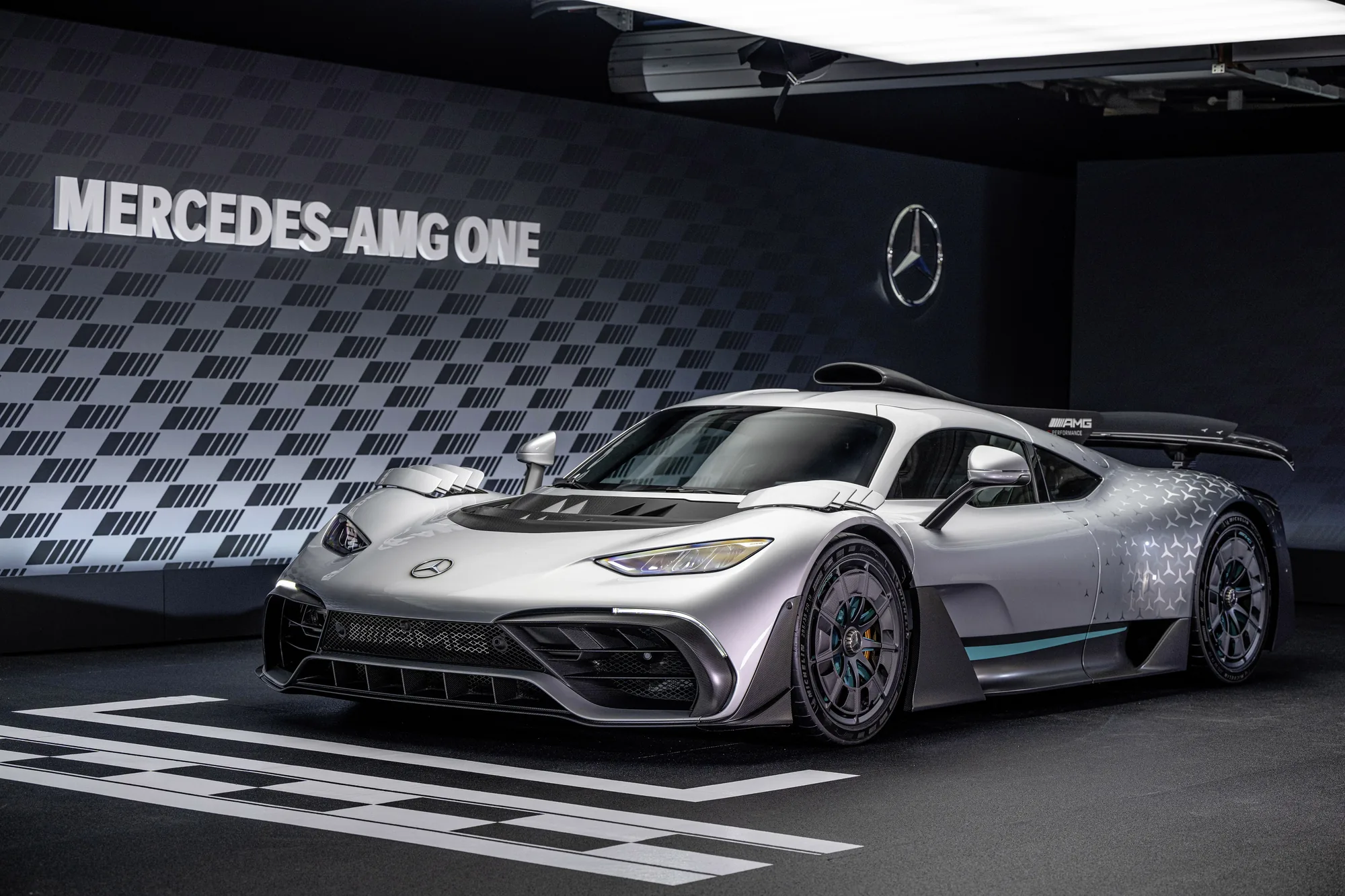
AMG was founded on 1 June 1967. Fifty-five years later, to the day, the production AMG ONE had its world premiere.
The Project ONE concept car premiered at the 2017 Frankfurt IAA with more than 740 kW of system output. The concept was quoted at over 350 km/h, below 6 seconds from 0 to 200 km/h, 25 km of electric range and an 8-speed automated manual gearbox.
Final assembly takes place on a small-series line in Coventry, built with Multimatic: 16 assembly and test stations, with more than 50 specialists working on each car. Seventy-five per cent of the parts are fitted before the high-voltage components, and some carbon-fibre sections are just 1.2 mm thick.
The powertrain is built by Mercedes-AMG High Performance Powertrains in Brixworth. Orders for the 275 units exceeded the planned production run; the first customer cars were delivered in the second half of 2022. The price announced in 2017 was around EUR 2.275 million before taxes.
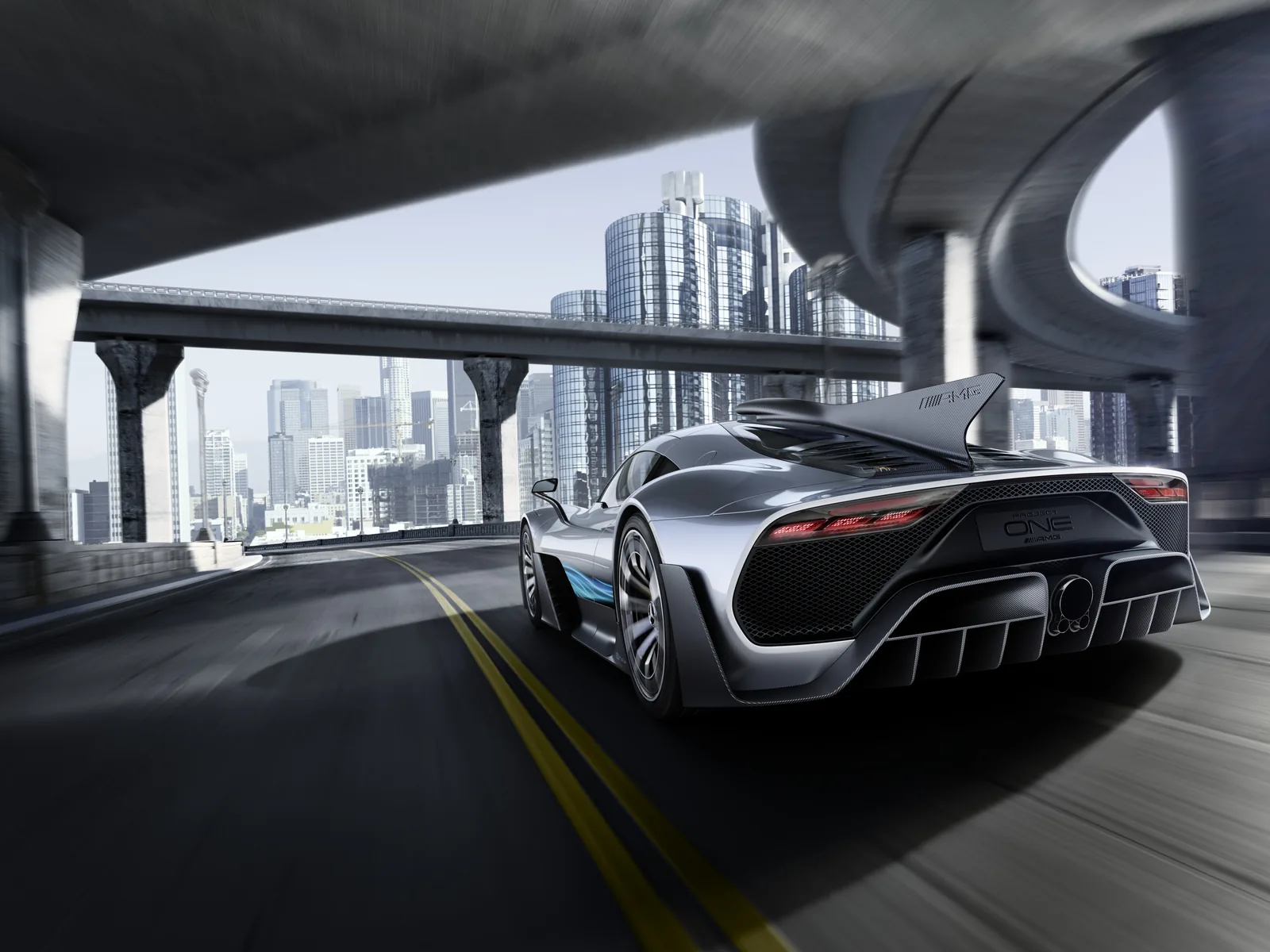
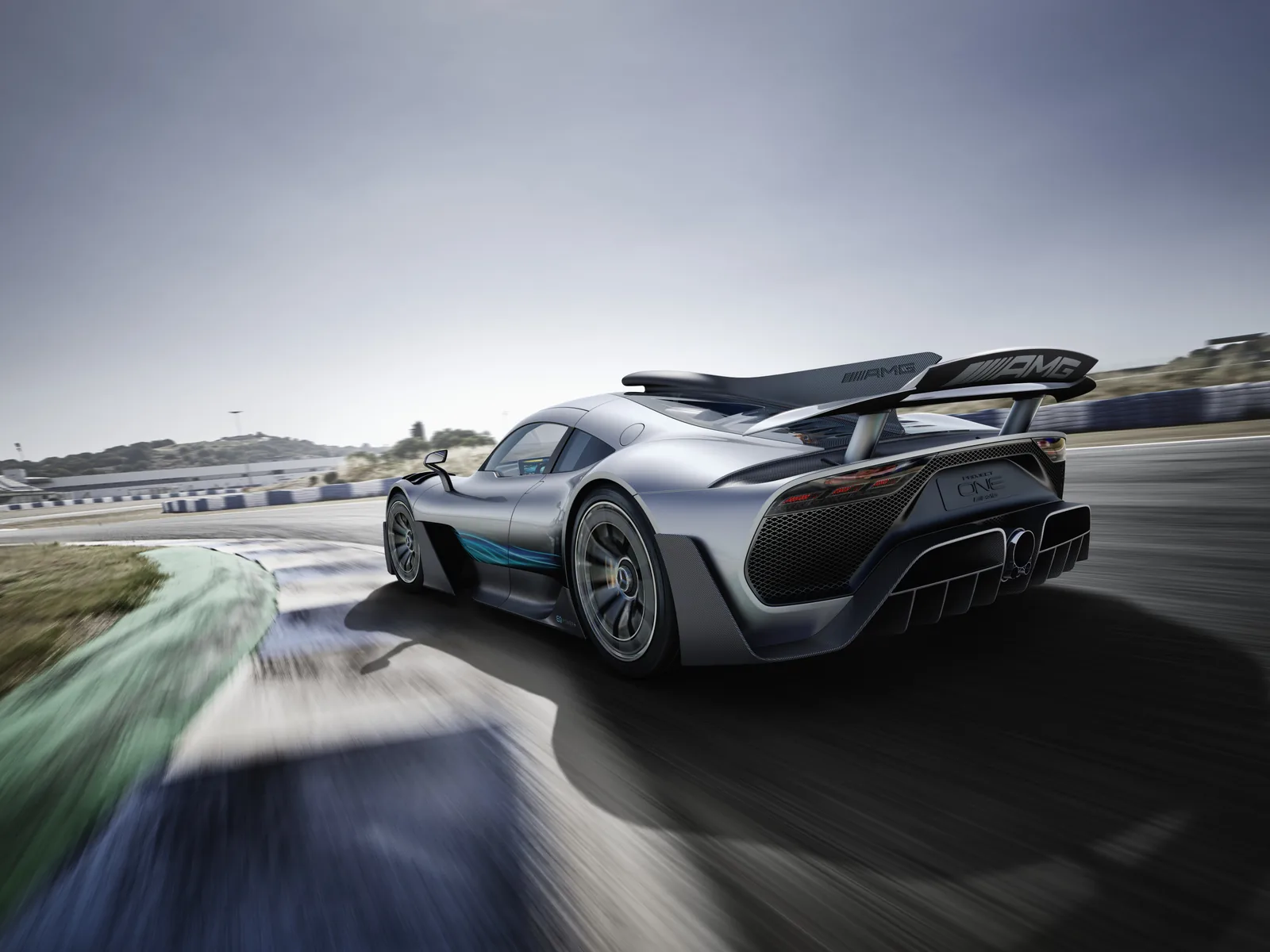
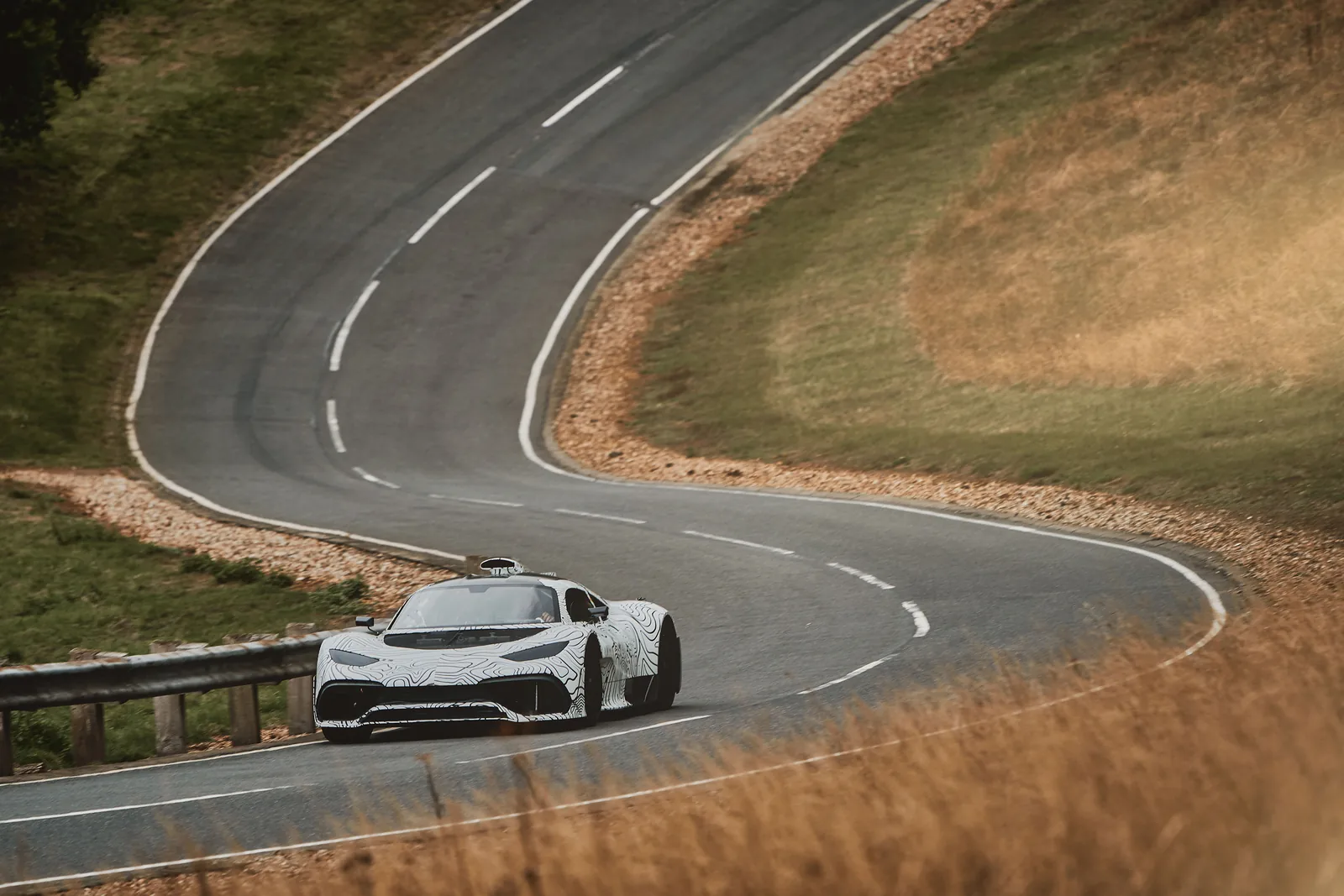
The Mercedes‑AMG ONE is the most ambitious project we have ever undertaken - from development to production.
Powertrain
E PERFORMANCE
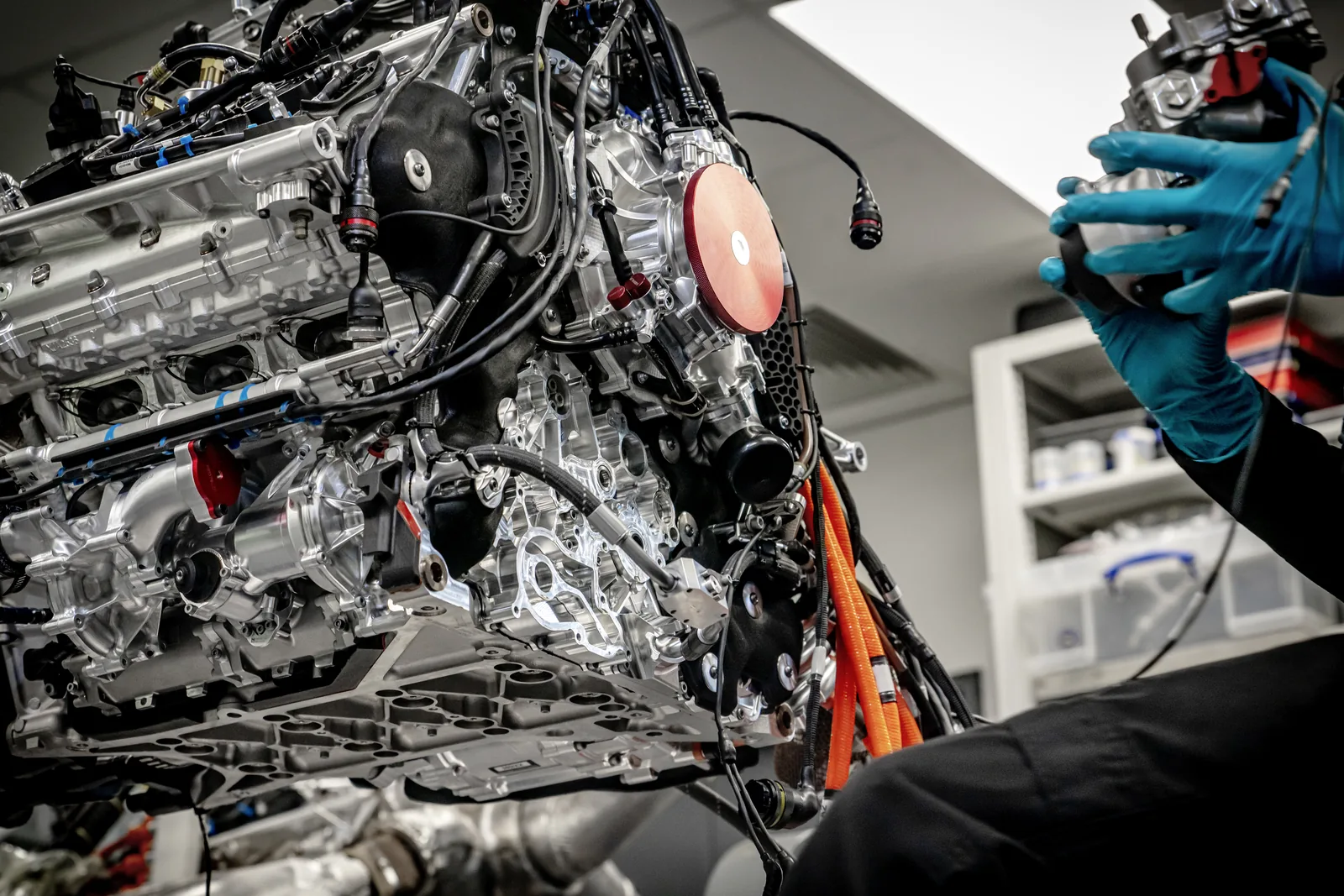
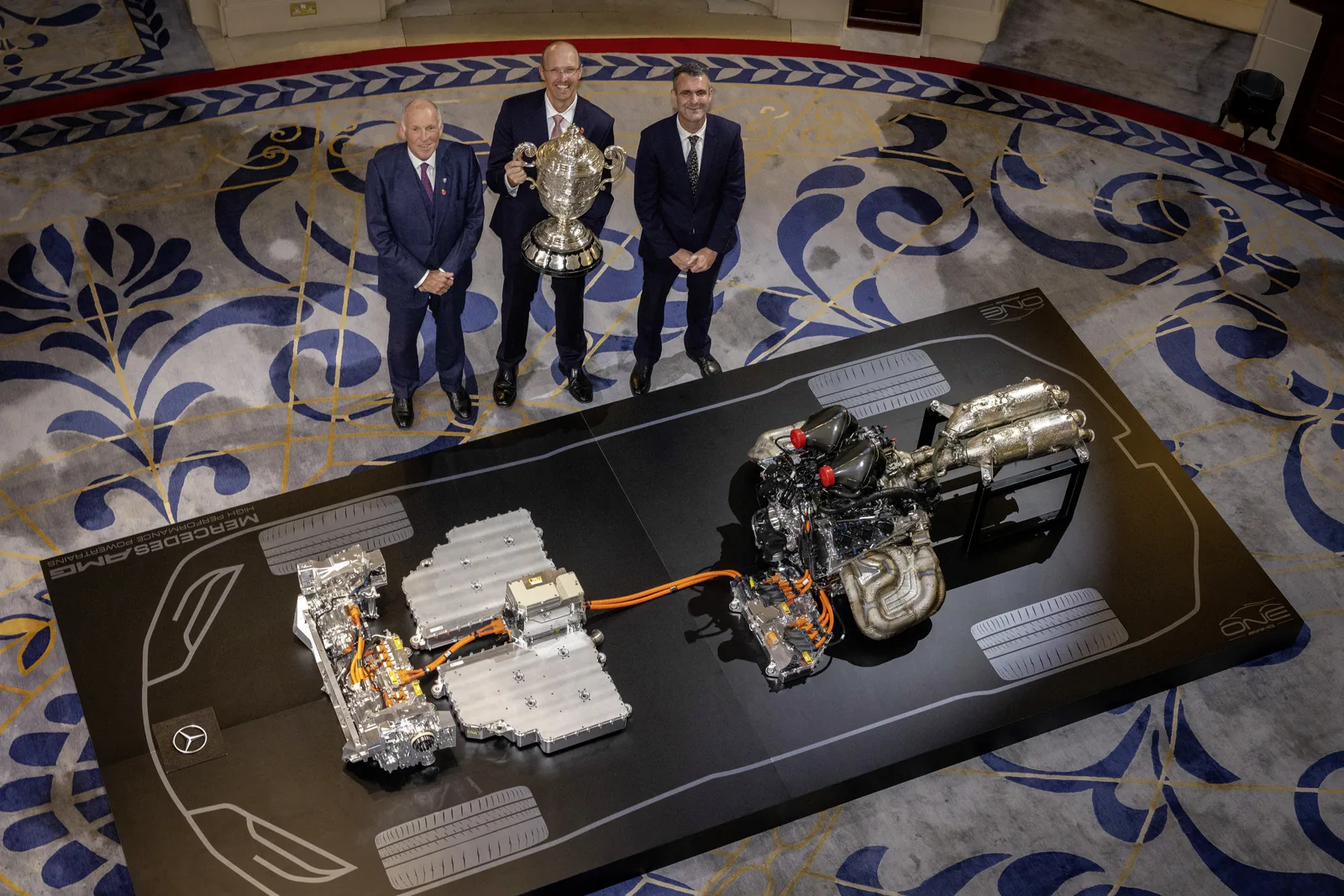
A hybrid system derived from Formula 1. One 1.6-litre turbocharged V6 engine and four electric motors form the powertrain, with system output of 782 kW.
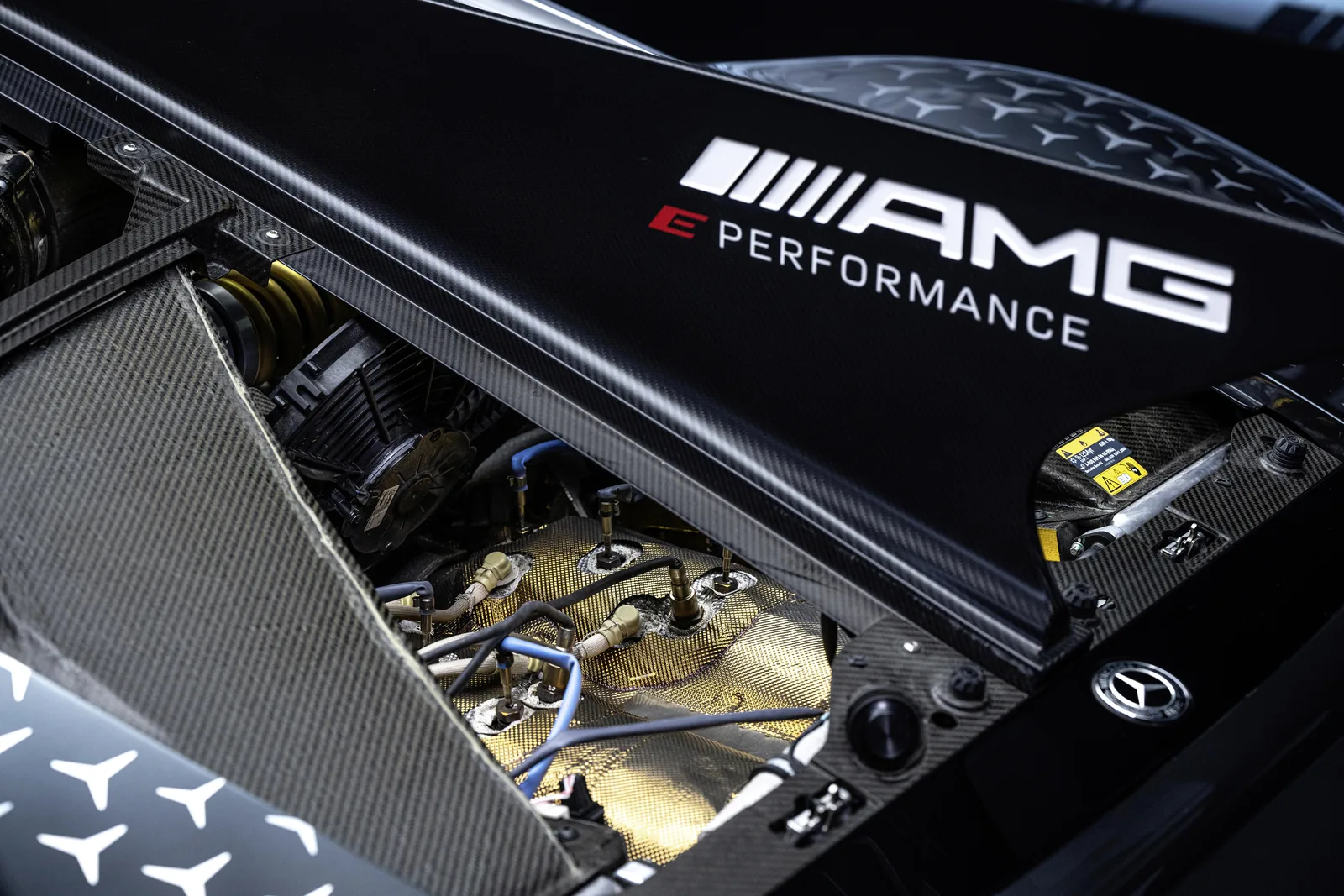
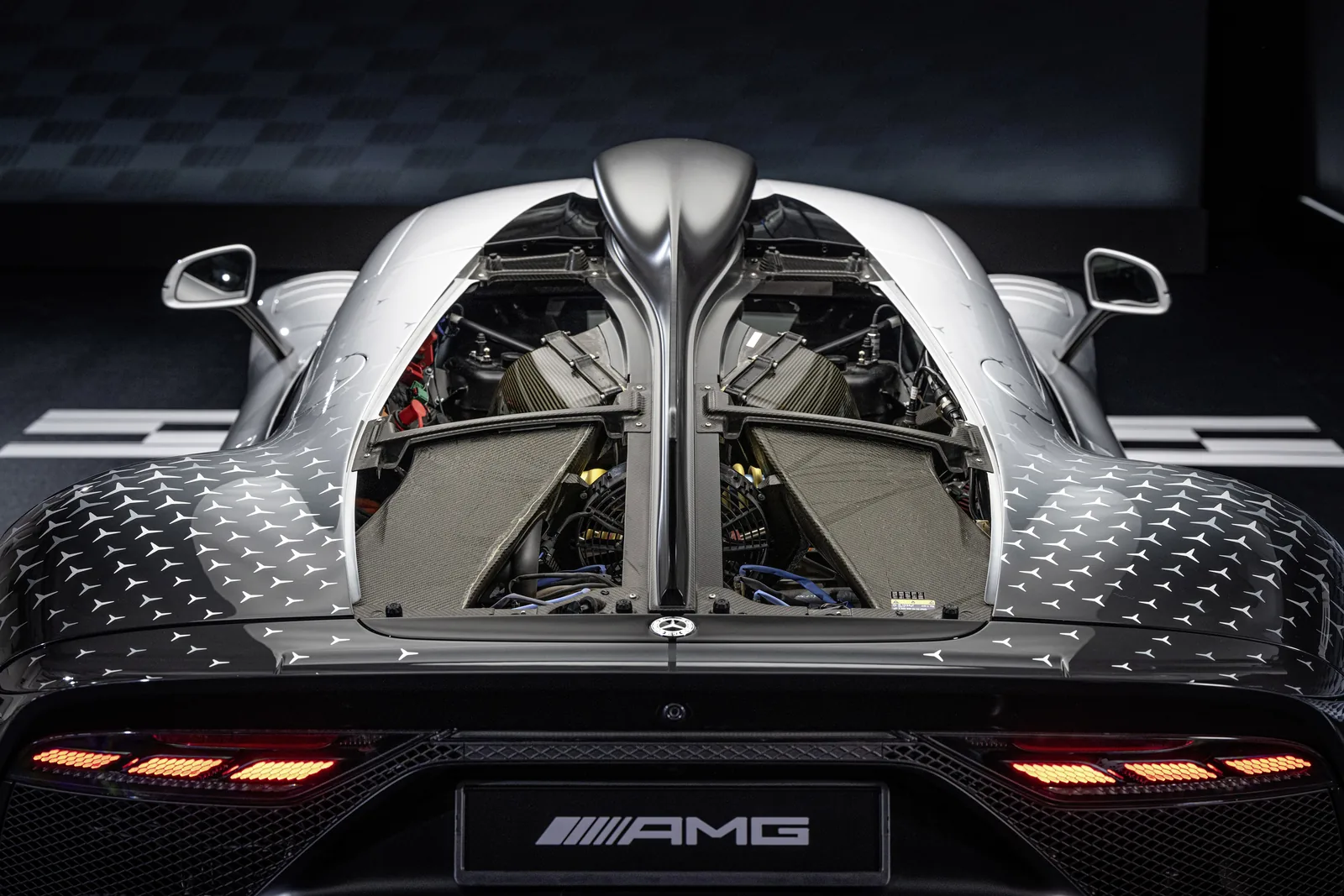
The engine is a 1.6-litre turbocharged V6 of 1,599 cc, with a bore and stroke of 80.0 and 53.03 mm. Four overhead camshafts are driven by spur gears and the valve springs are pneumatic; the engine revs to 11,000 rpm and produces 422 kW (574 hp).
The MGU-K is mounted on the engine and linked to the crankshaft by spur gears, producing 120 kW; the MGU-H sits on the turbocharger shaft, produces 90 kW and can spin the compressor wheel to 100,000 rpm. Two front-axle motors, each rated at 120 kW with a 50,000 rpm rotor limit, drive the front wheels independently.
Turbocharged, with direct and port injection; maximum boost pressure 3.5 bar.
Crankshaft-mounted motor and turbocharger-shaft motor; the MGU-H also generates electricity from exhaust energy.
The front axle is driven electrically, with independent left and right wheel control and torque distribution per wheel.
Energy path
ENERGY PATH
MGU-K, MGU-H, front axle and battery. Energy flows along four paths, for drive, boosting, front-axle drive and storage.
Mounted on the engine and linked to the crankshaft by spur gears. It delivers power under acceleration and recovers energy under deceleration.
Integrated into the turbocharger shaft. It drives the compressor wheel and converts exhaust energy into electricity.
The front axle is driven electrically by two motors, and braking energy recuperation reaches up to 80 percent in everyday driving.
The high-voltage battery is an 800 V lithium-ion unit with individually cooled cells, supplying the front axle and the MGU-K.
The system operates at 800 V. Coolant flows around every cell, so the average operating temperature stays at around 45 °C.
Monocoque and chassis
F1 MONOCOQUE
The car is built around a carbon-fibre monocoque, weighs 1,695 kg and uses five-link suspension front and rear with a 7-speed gearbox.
The monocoque is a carbon-fibre structure derived from Formula 1, with the engine and gearbox acting as load-bearing members that fully support the rear suspension. Both axles use five-link aluminium suspension with two adjustable transverse push-rod spring struts.
The push-rod layout replaces a conventional tubular anti-roll bar, so roll stiffness and damping are independent of lift stiffness and damping. Adaptive damping is linked to the drive program, and the body lowers by 37 mm at the front and 30 mm at the rear.
- Monocoque
- Carbon fibre, with a load-bearing engine and gearbox
- Suspension
- Five-link front and rear, transverse push-rods, adaptive damping
- Transmission
- 7-speed automated manual, 4-disc carbon-fibre clutch
- Brake system
- Carbon-fibre ceramic composite, 398 × 38 mm front, 380 × 34 mm rear
- Kerb weight
- 1,695 kg (DIN)
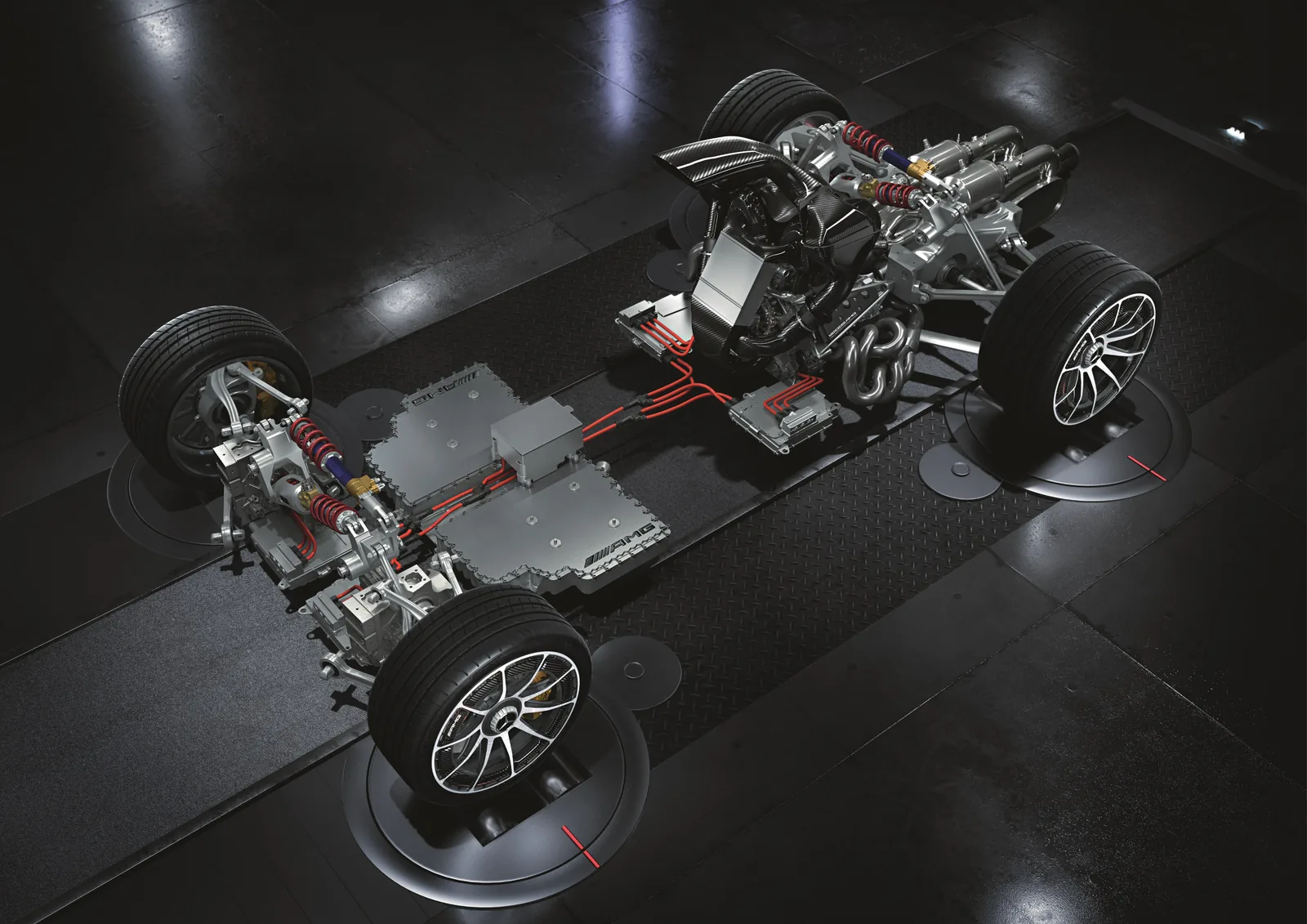
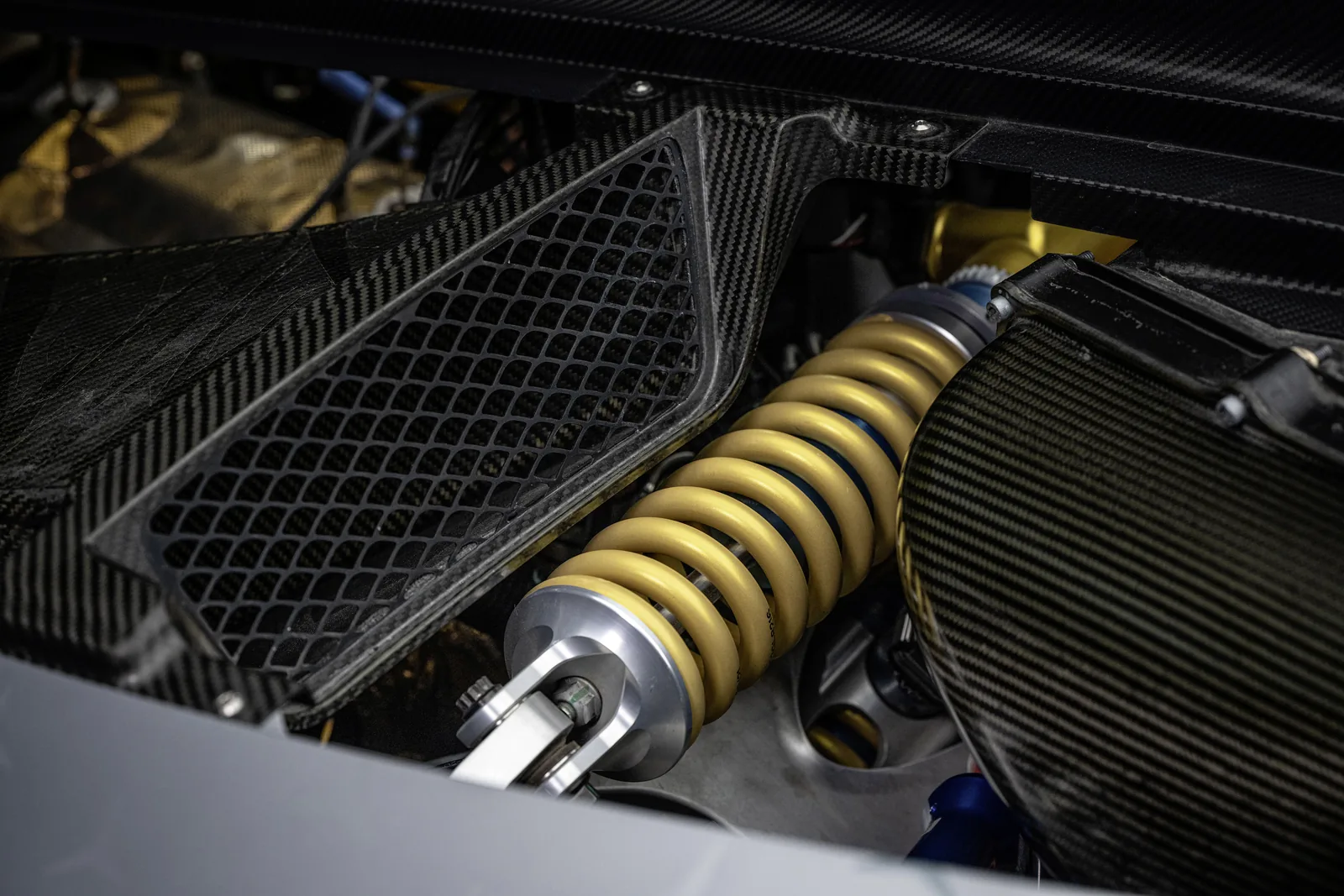
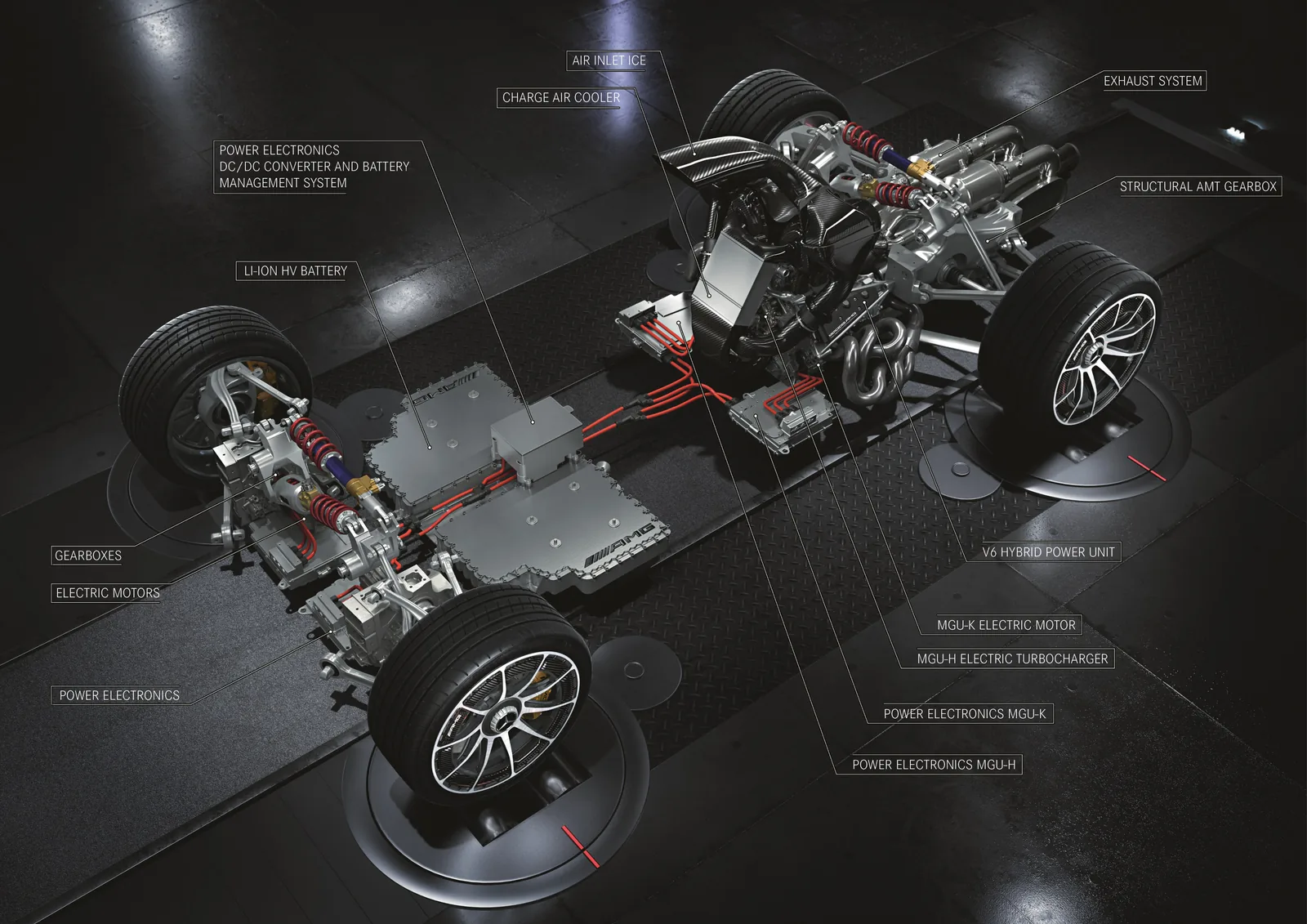
From the materials used, the exceptional chassis components to the aerodynamic refinements - in terms of complexity, the Mercedes-AMG ONE is hard to beat.
Aerodynamics
ACTIVE AERODYNAMICS
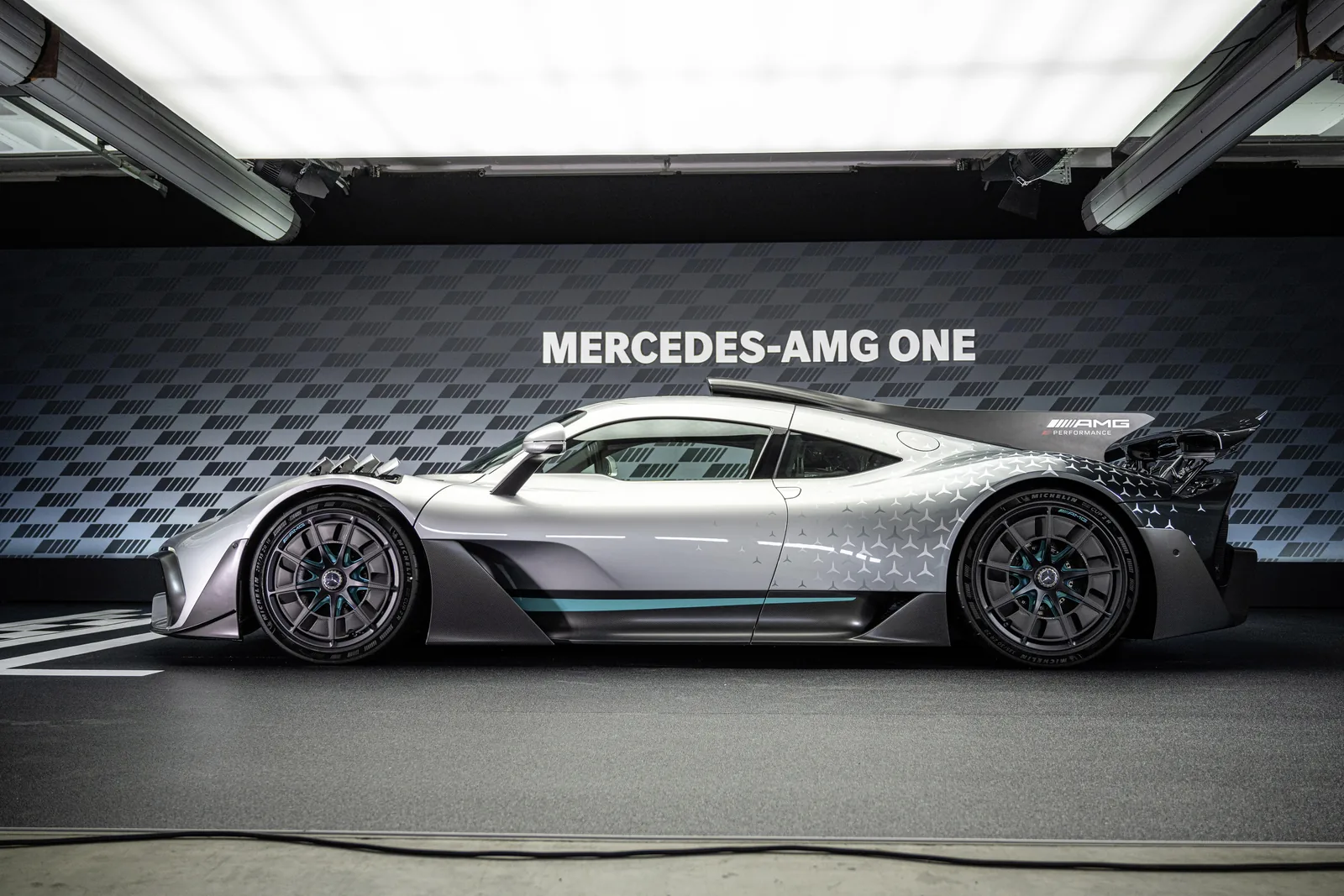
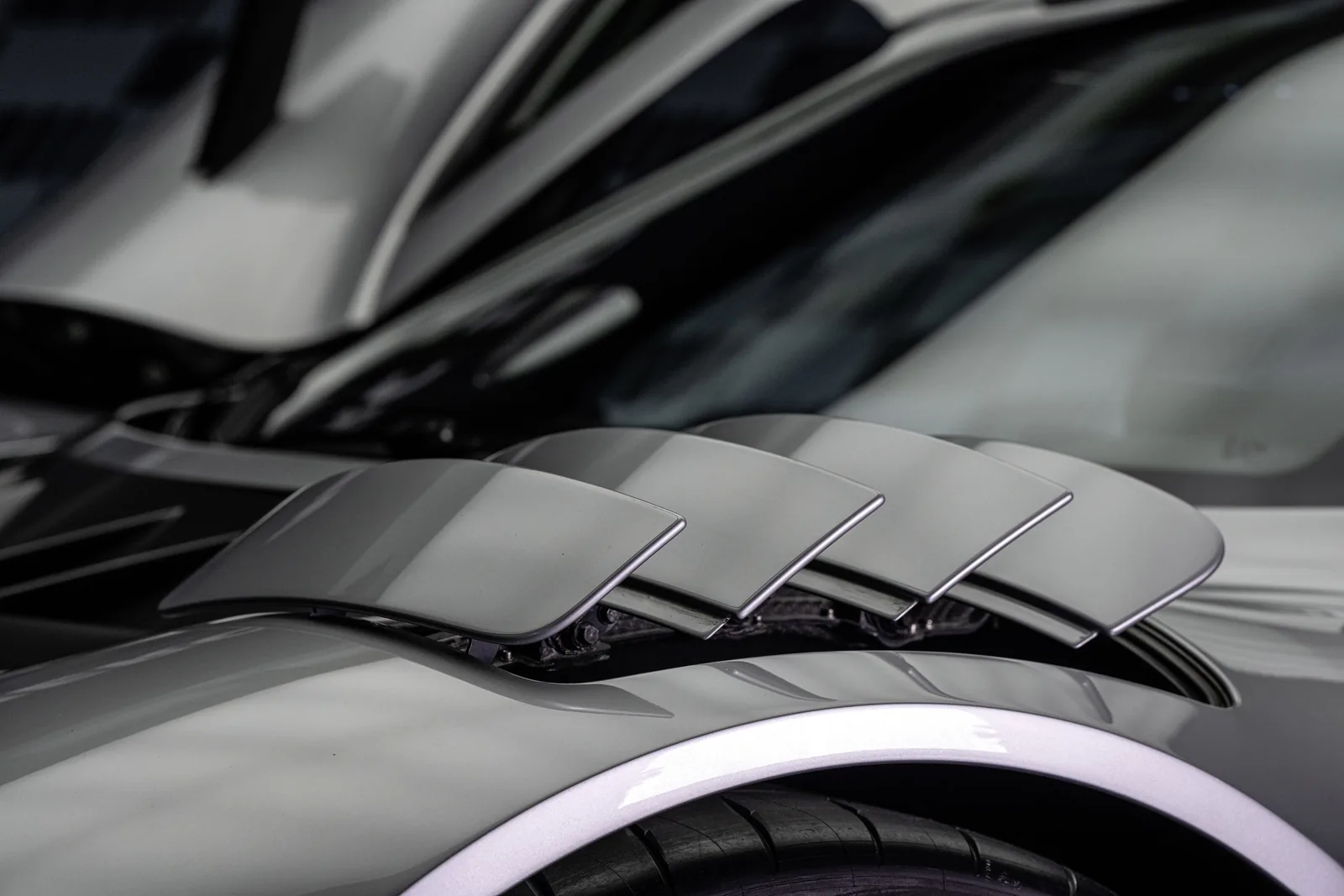
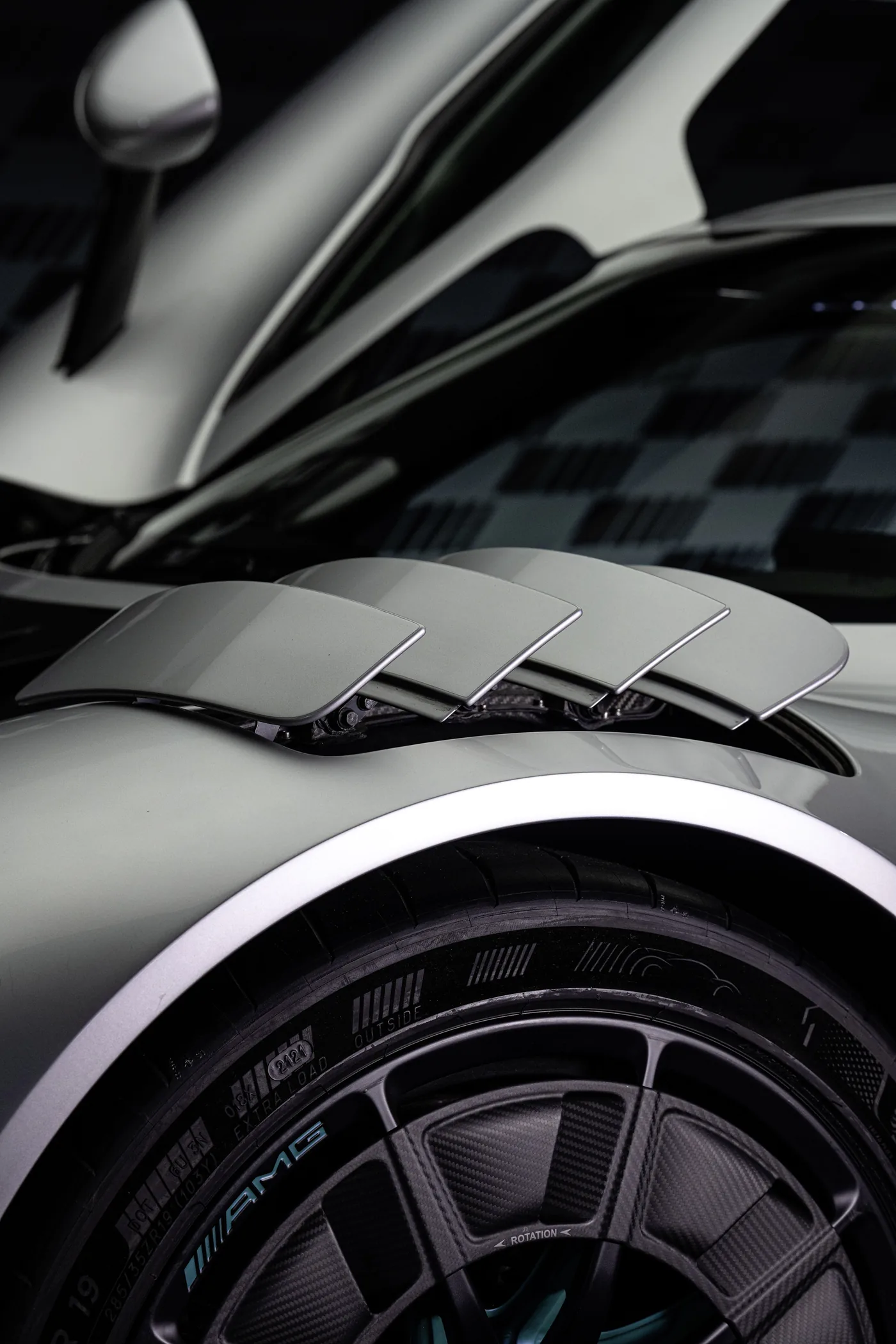
Active aerodynamics offer three setups, Highway, Track and Race DRS, controlled hydraulically and linked to the drive program.
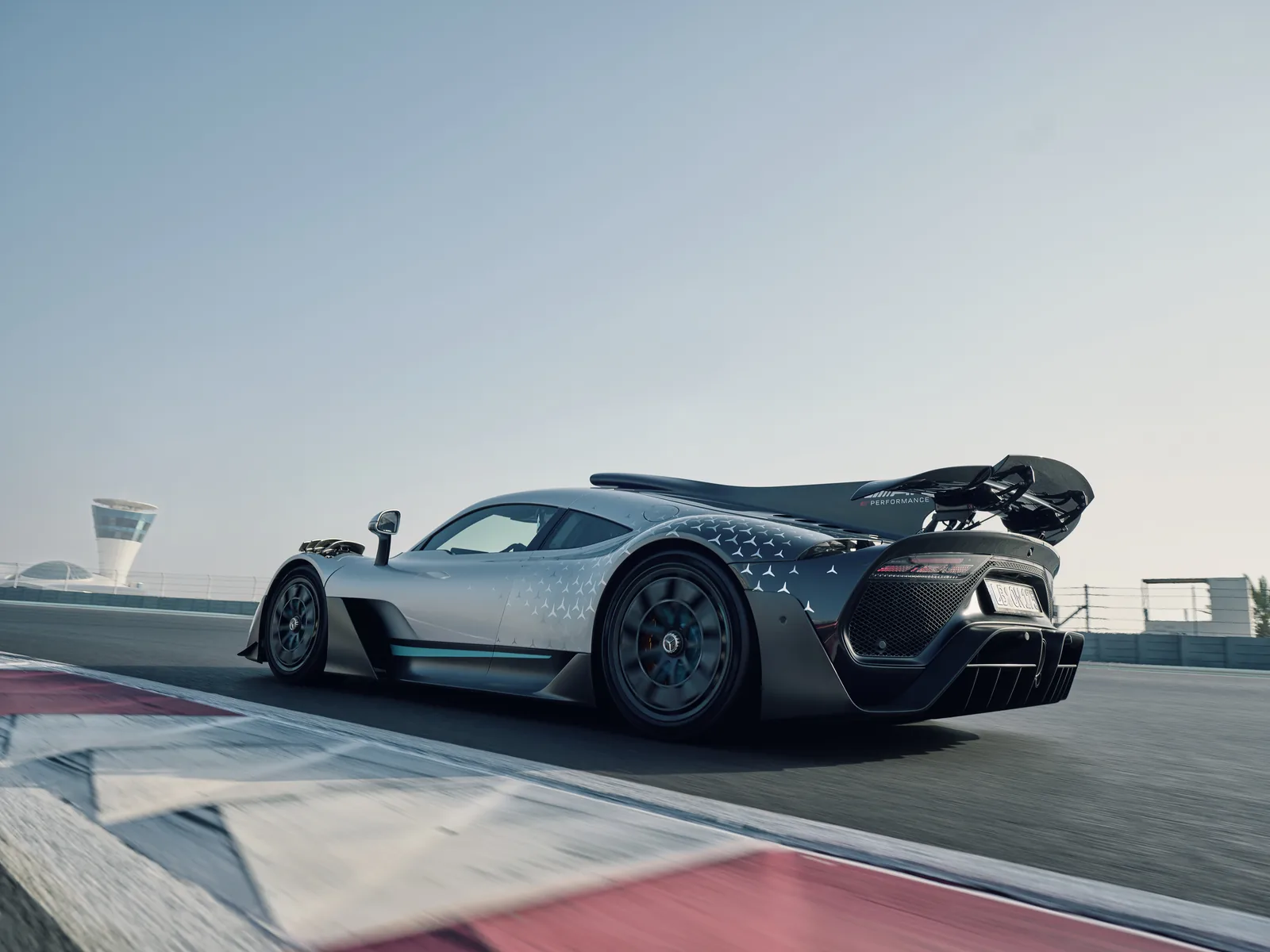
In Highway mode the louvers close, the front diffuser flaps extend and the wing and flaps retract; in Track mode the louvers open, the diffuser flaps tilt up and the two-stage rear wing extends fully while the body is lowered. Total downforce in Track mode is five times that of the Highway setting.
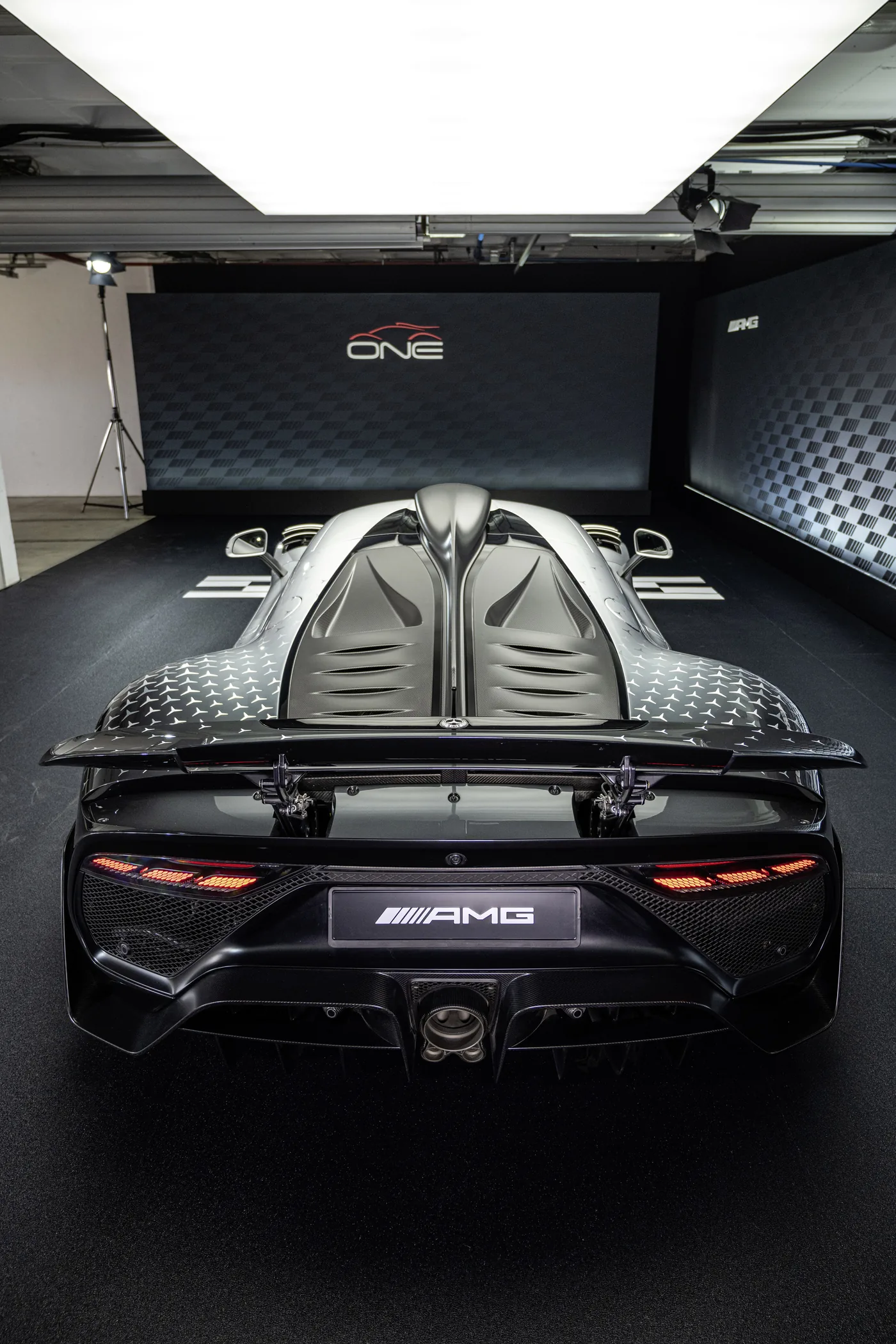
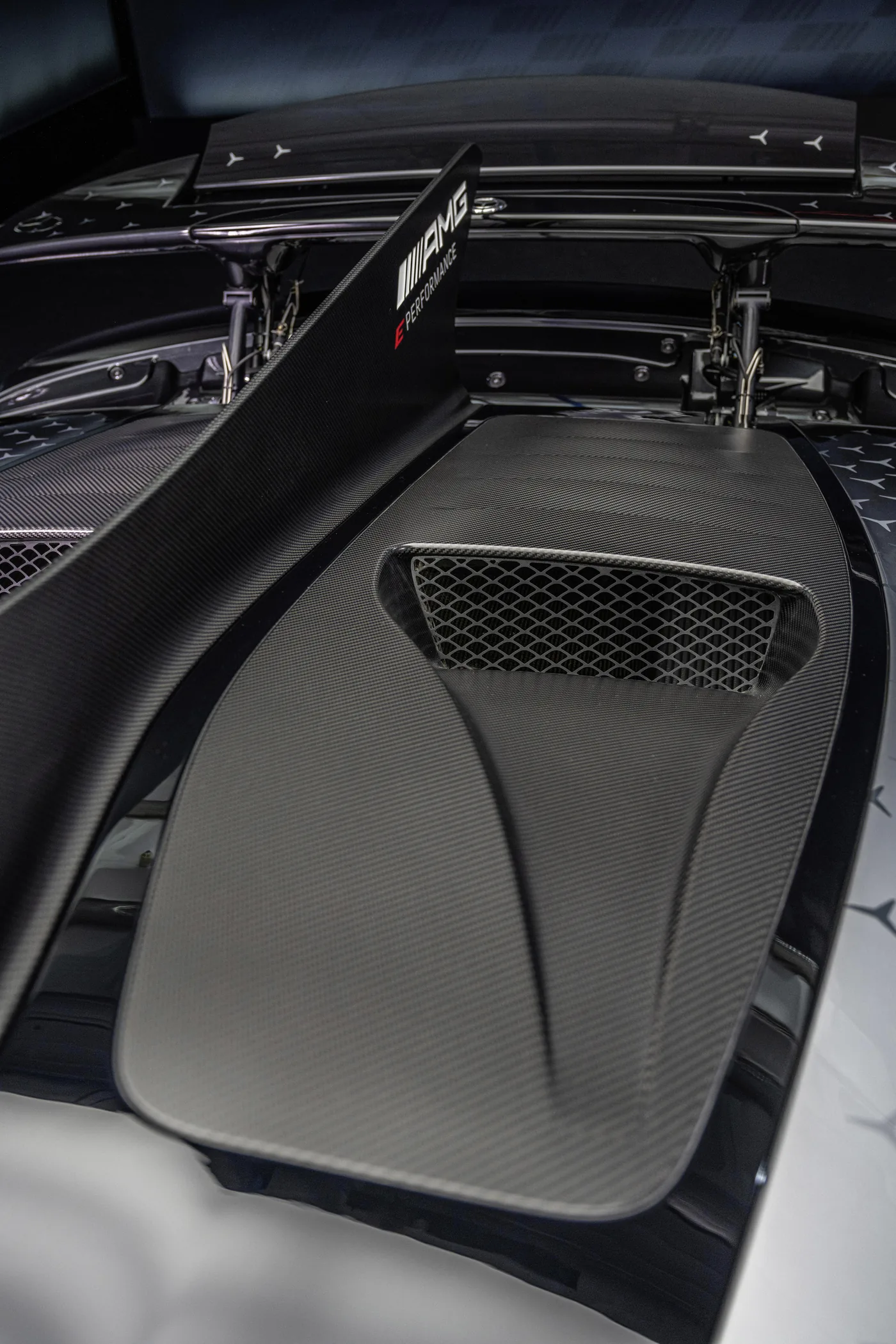
With DRS open, the rear wing flap retracts and downforce drops by around 20 percent. The car generates downforce from 50 km/h, the roof-mounted shark fin limits cross-flow and separation at the rear, and NACA intakes are integrated into both removable covers.
- Highway mode
- Rear wing retracted, louvres closed
- Track mode
- Rear wing fully extended, louvres open, body lowered 37 / 30 mm
- Race DRS
- Downforce reduced by around 20 percent
- Downforce gain
- Up to five times the road programs
Performance
PERFORMANCE DATA
Official figures: 0 to 100 km/h in 2.9 s, 0 to 200 km/h in 7.0 s, 0 to 300 km/h in 15.6 s, top speed 352 km/h.
NÜRBURGRING-NORDSCHLEIFE · 20.832 KM
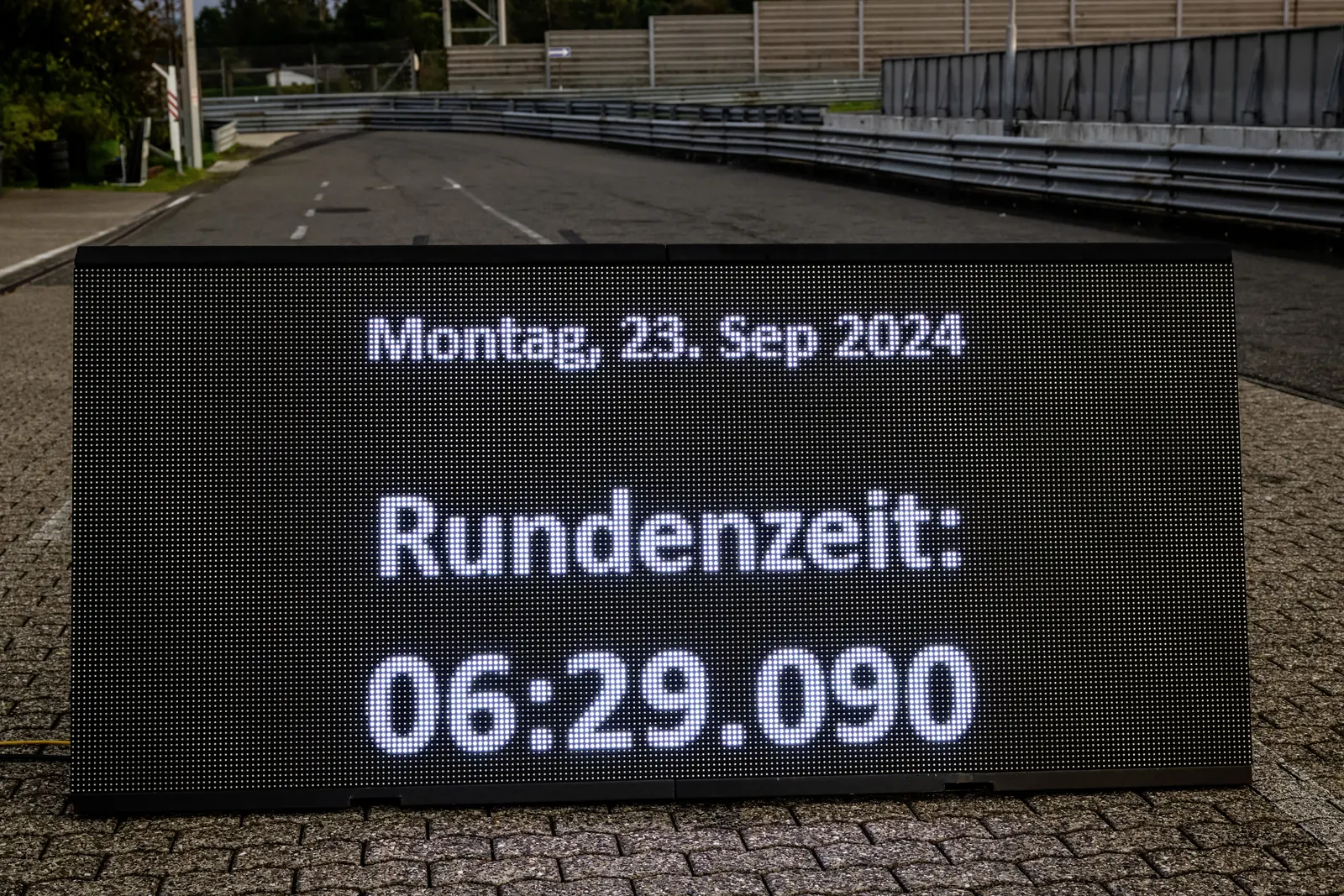
6:29.090
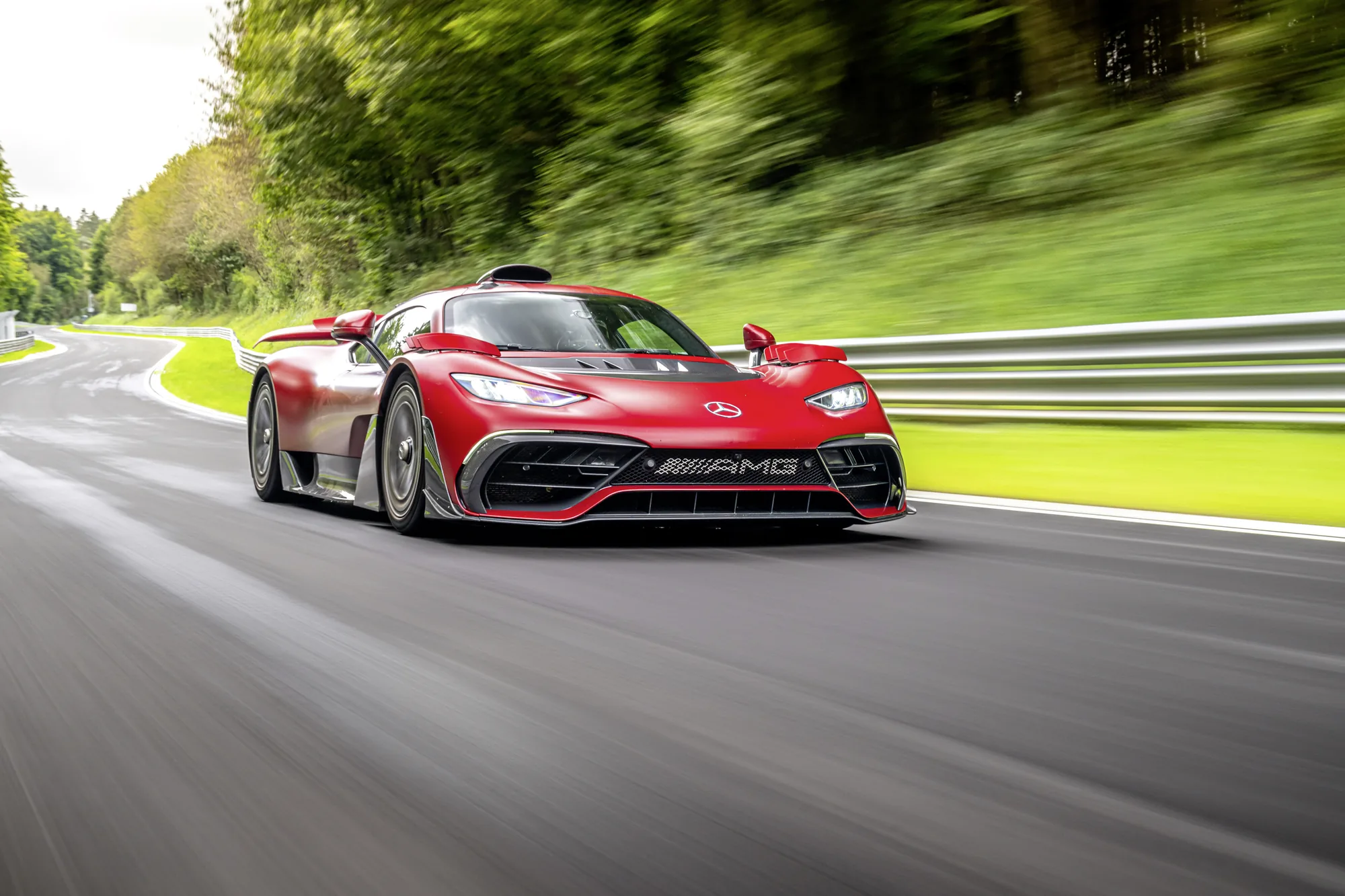
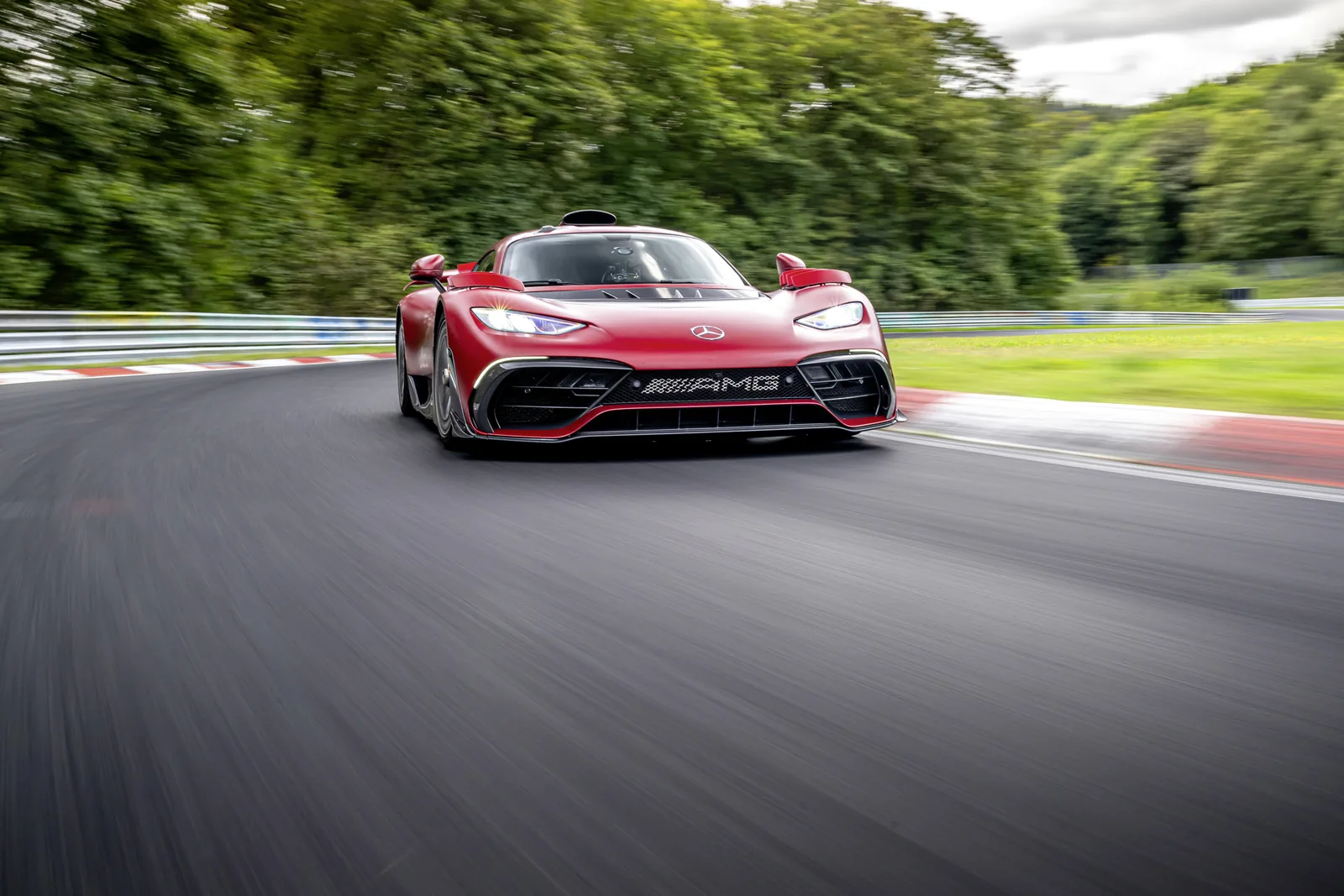
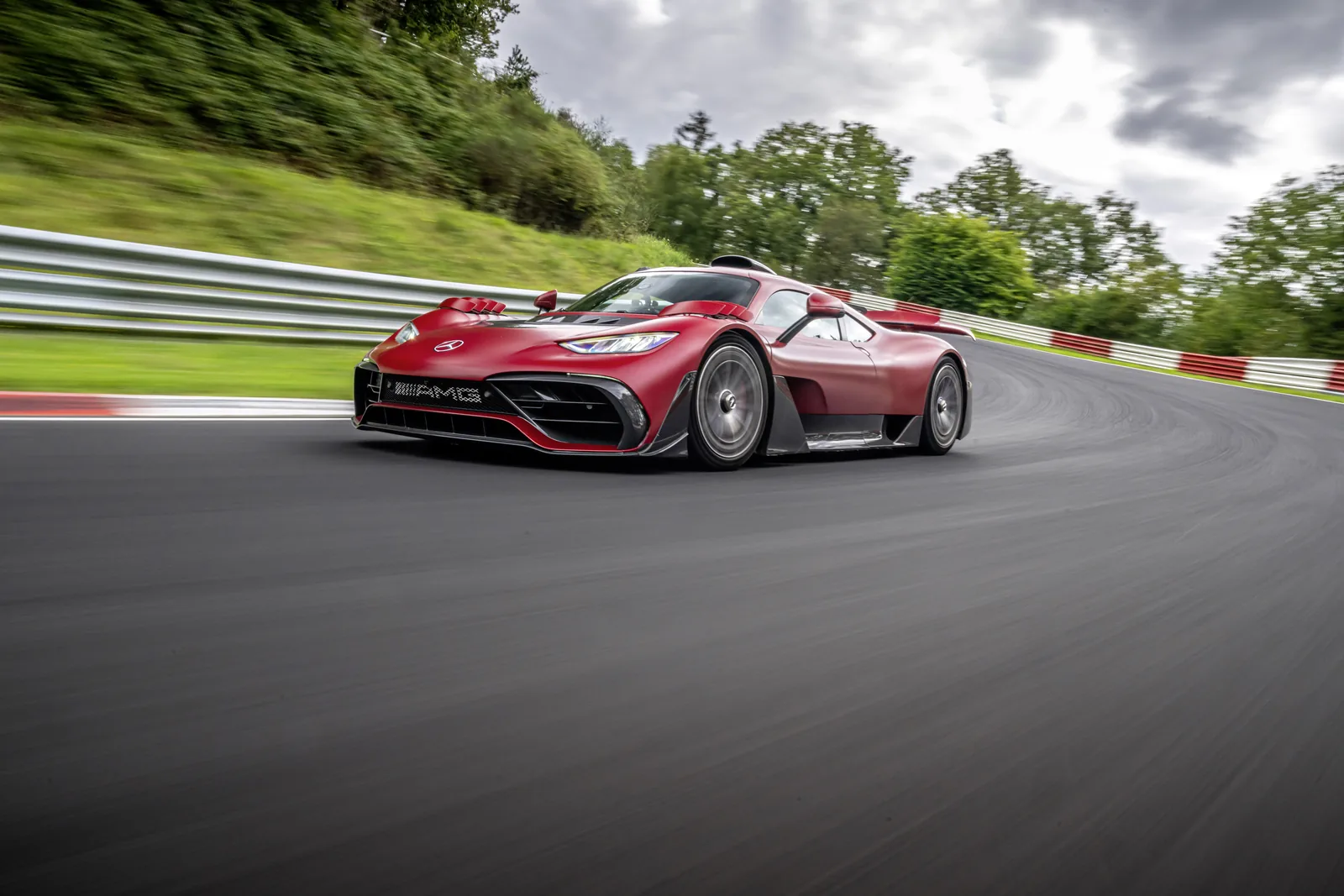
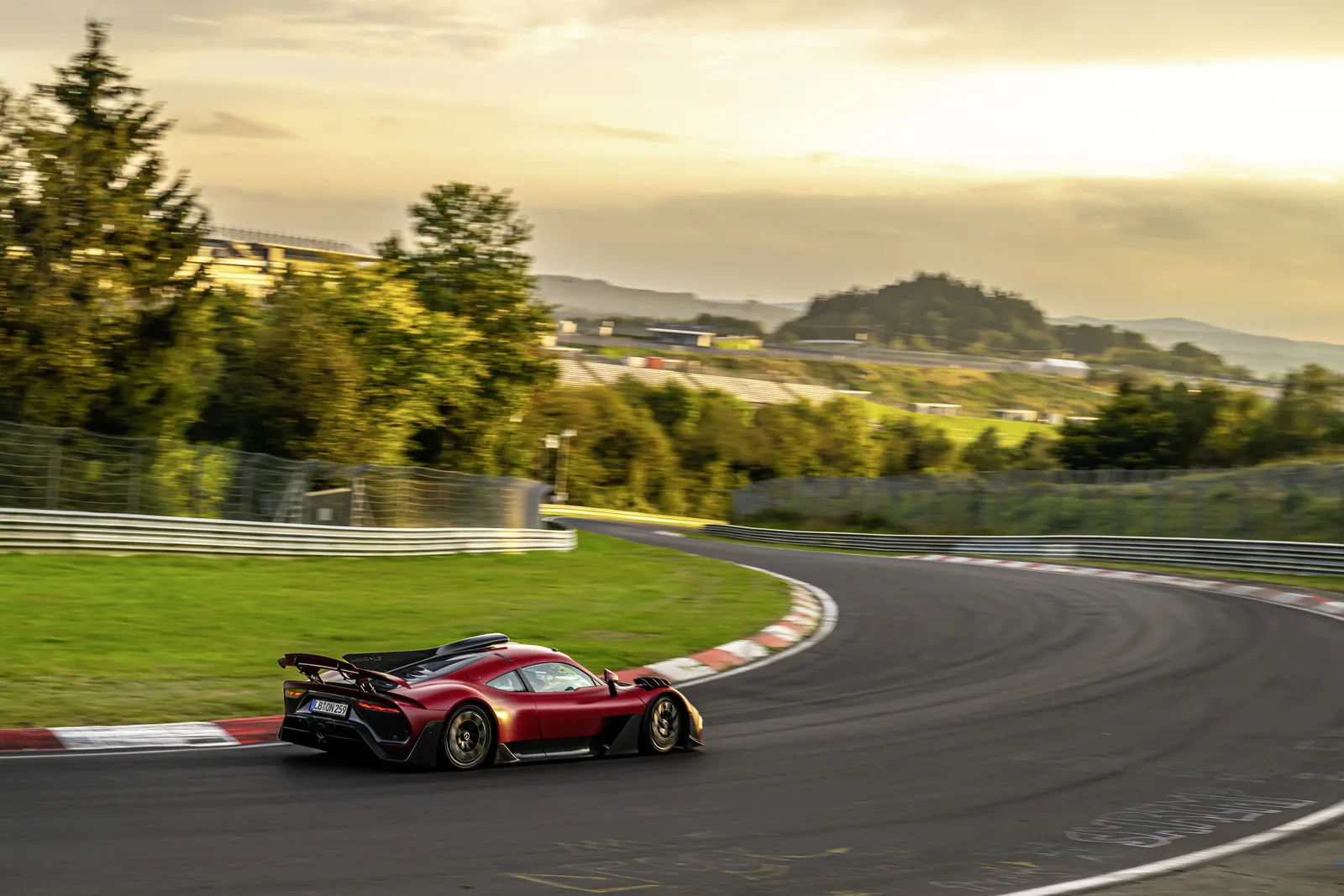
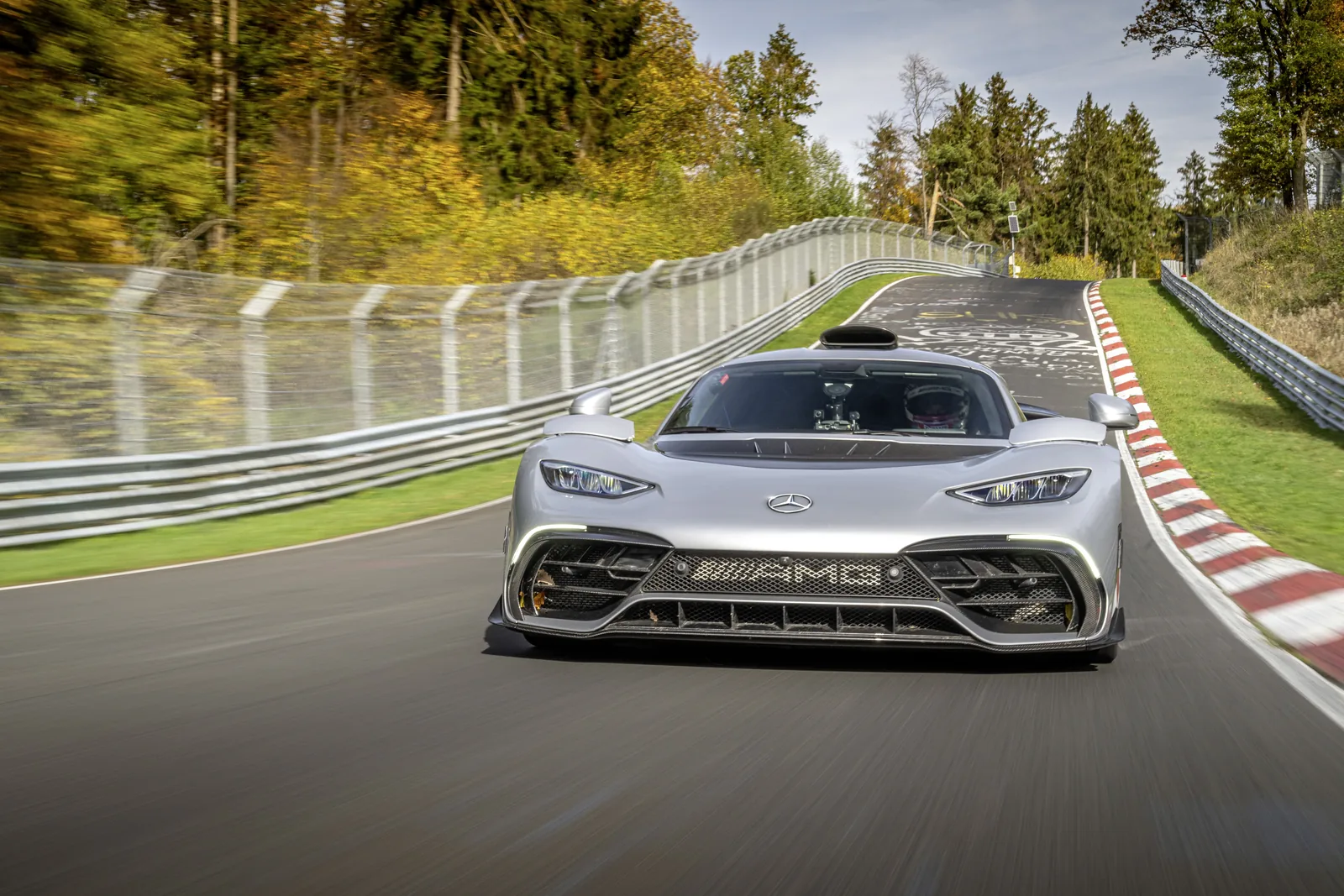
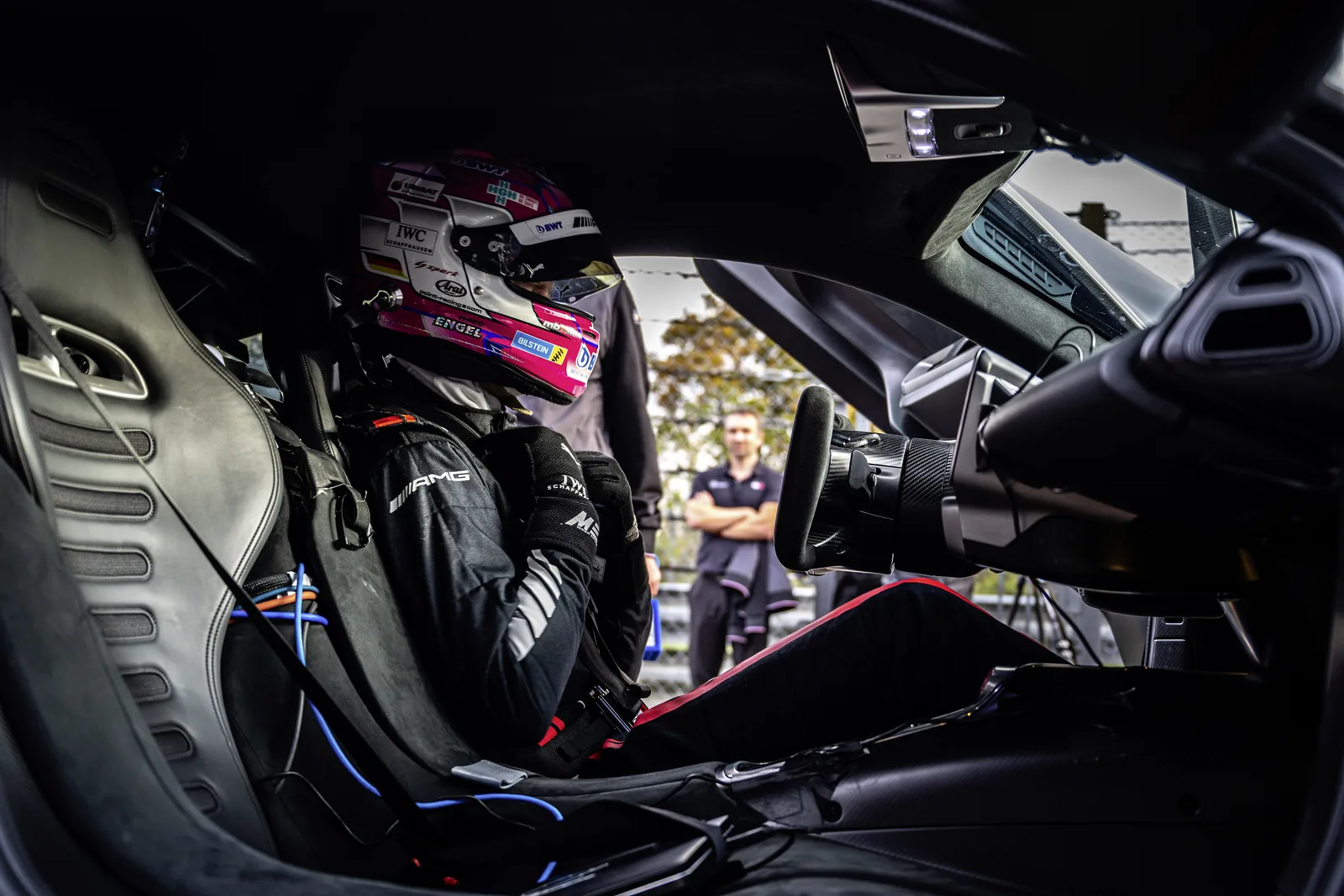
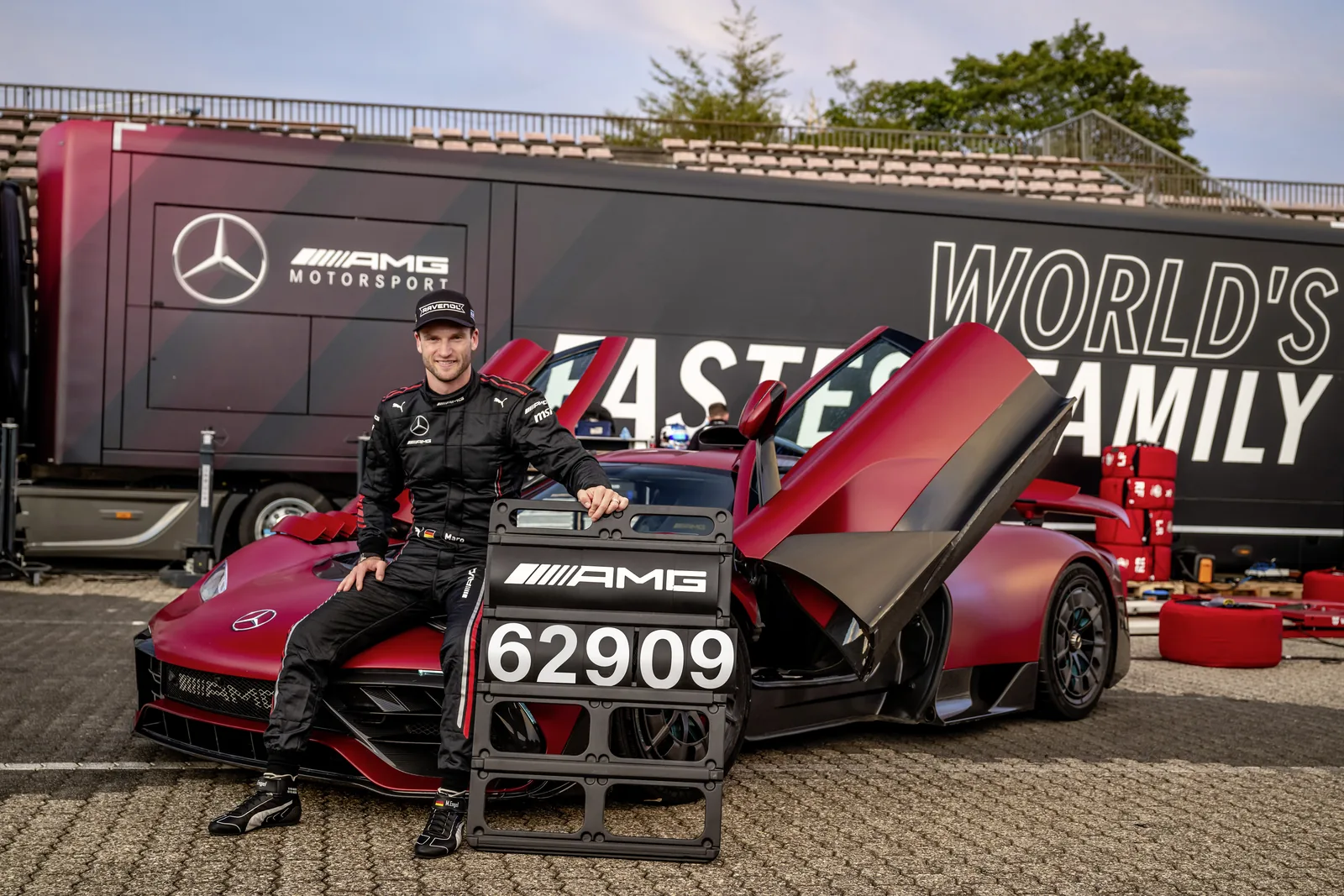
Two records, one driver. Maro Engel set 6:35.183 in 2022 and 6:29.090 in 2024.
The lap was set on 28 October 2022 and published on 10 November. The Nordschleife measures 20.832 km; conditions were sunny with a light breeze, the track still damp and partly dirty. The final attempt started at 17:14:31 and stopped the clock at 6:35.183, a record for road-legal production cars.
The new lap came on the third timed lap, at 18:56 on 23 September 2024, in 6:29.090. Air temperature was 15 °C and asphalt 20 °C, with a dry track throughout. The lap was more than five seconds faster than in 2022, making it the first road-car lap under 6:30.
ONE DRIVER · TWO RECORDS
DELTA−6.093 s · −1.54%
Today we were able to demonstrate the maximum potential of the AMG ONE.
Exterior design
EXTERIOR DESIGN
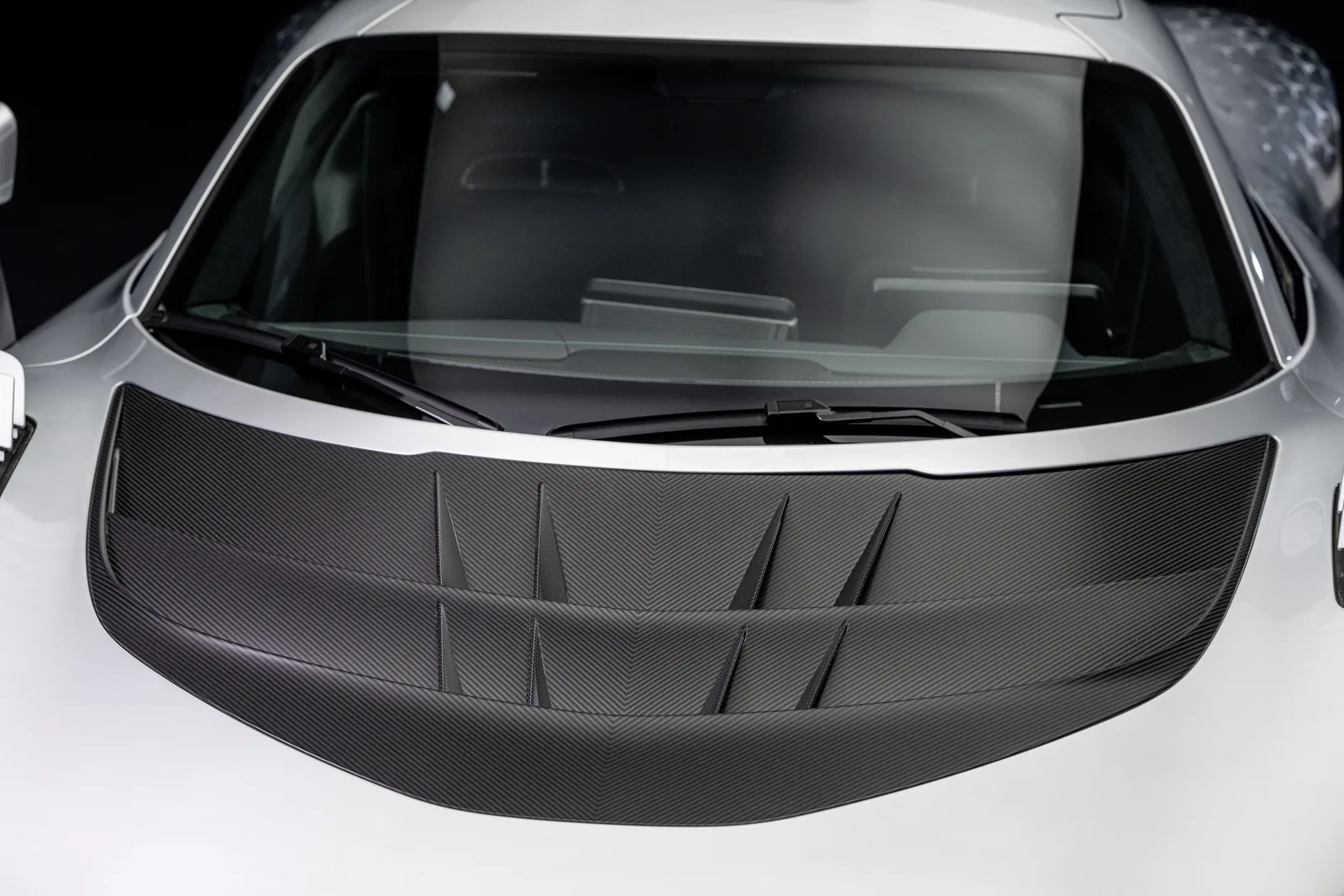
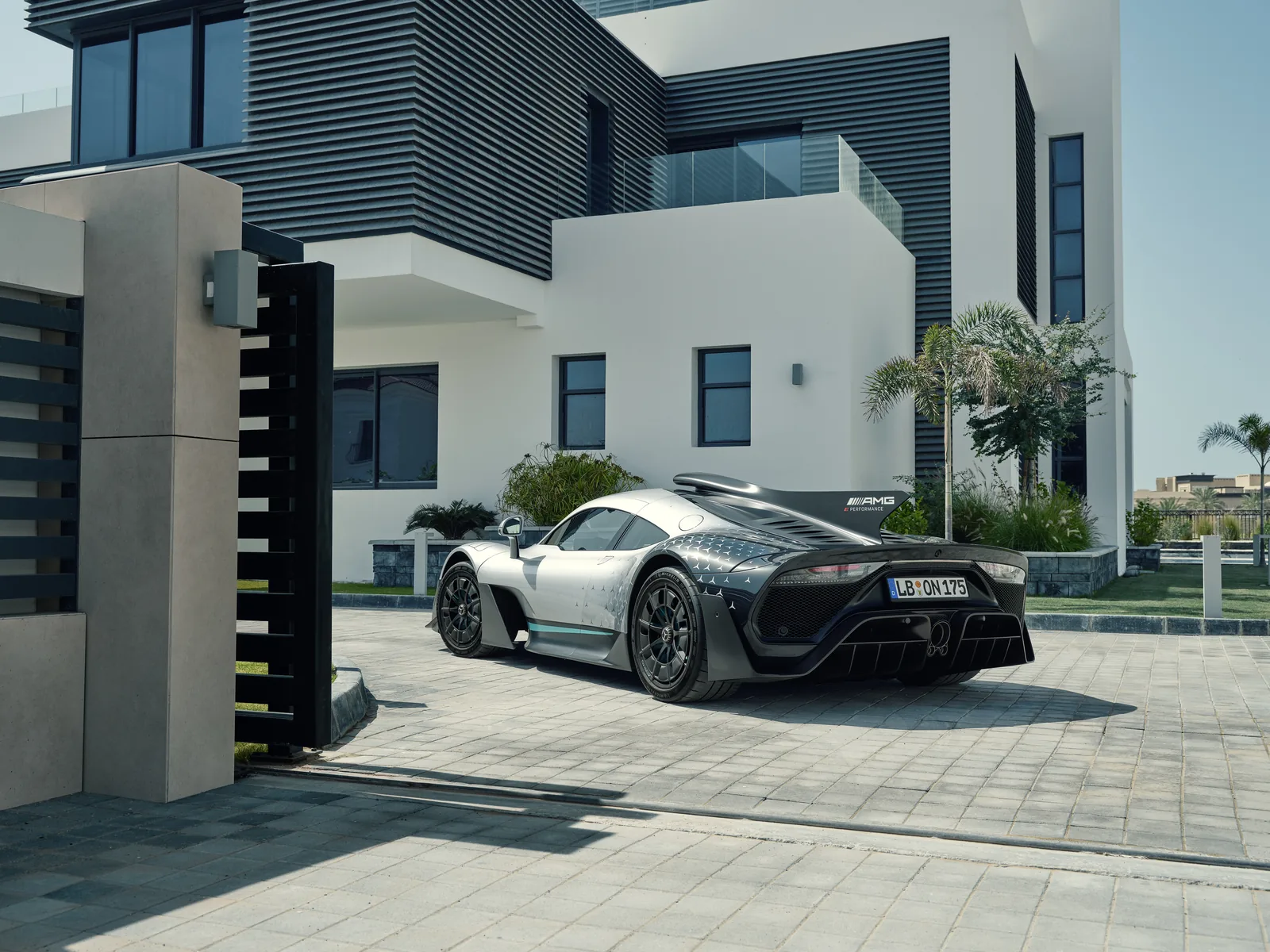
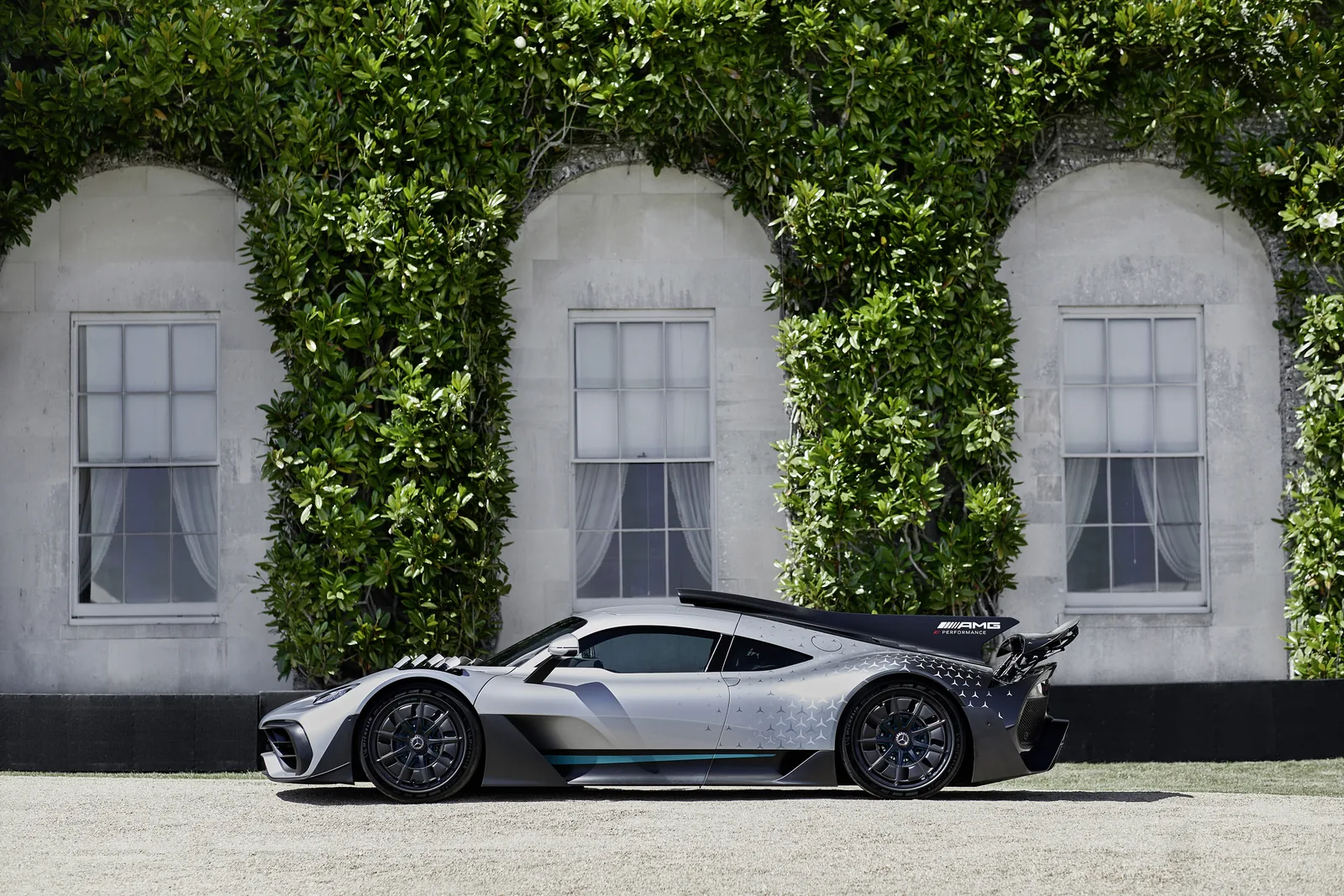
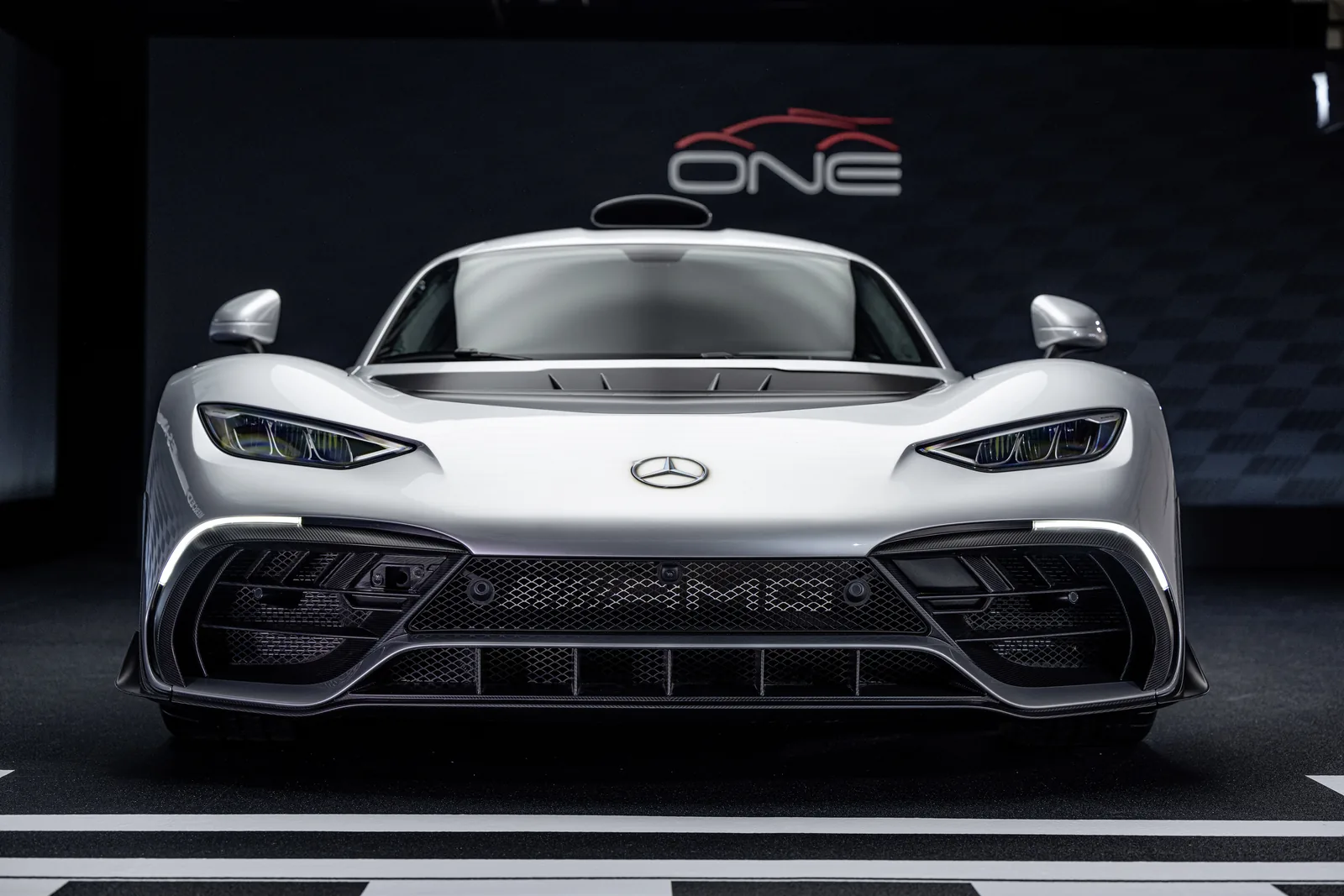
A carbon-fibre body shaped by function. Functional parts serve aerodynamics, cooling and weight reduction.
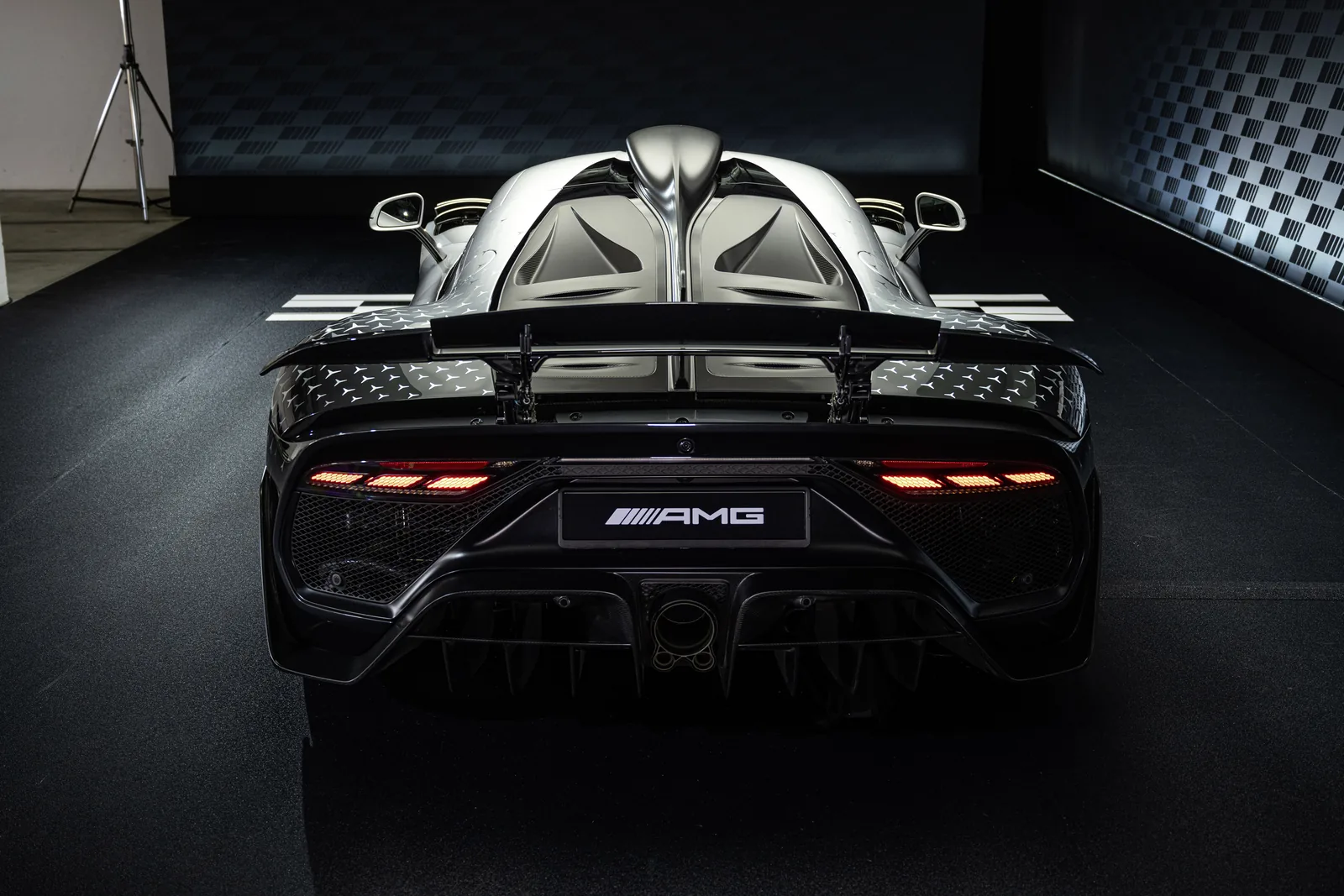
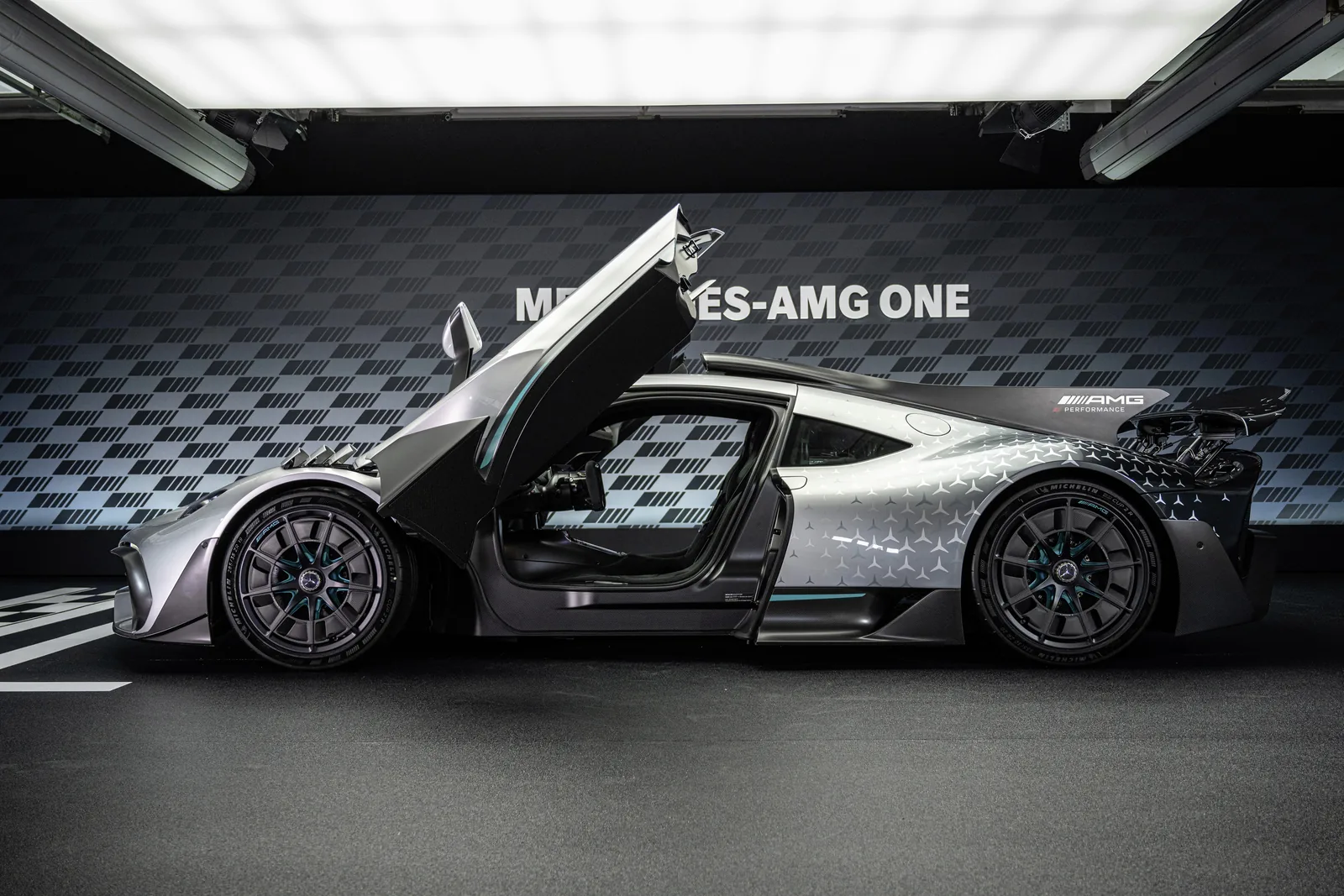
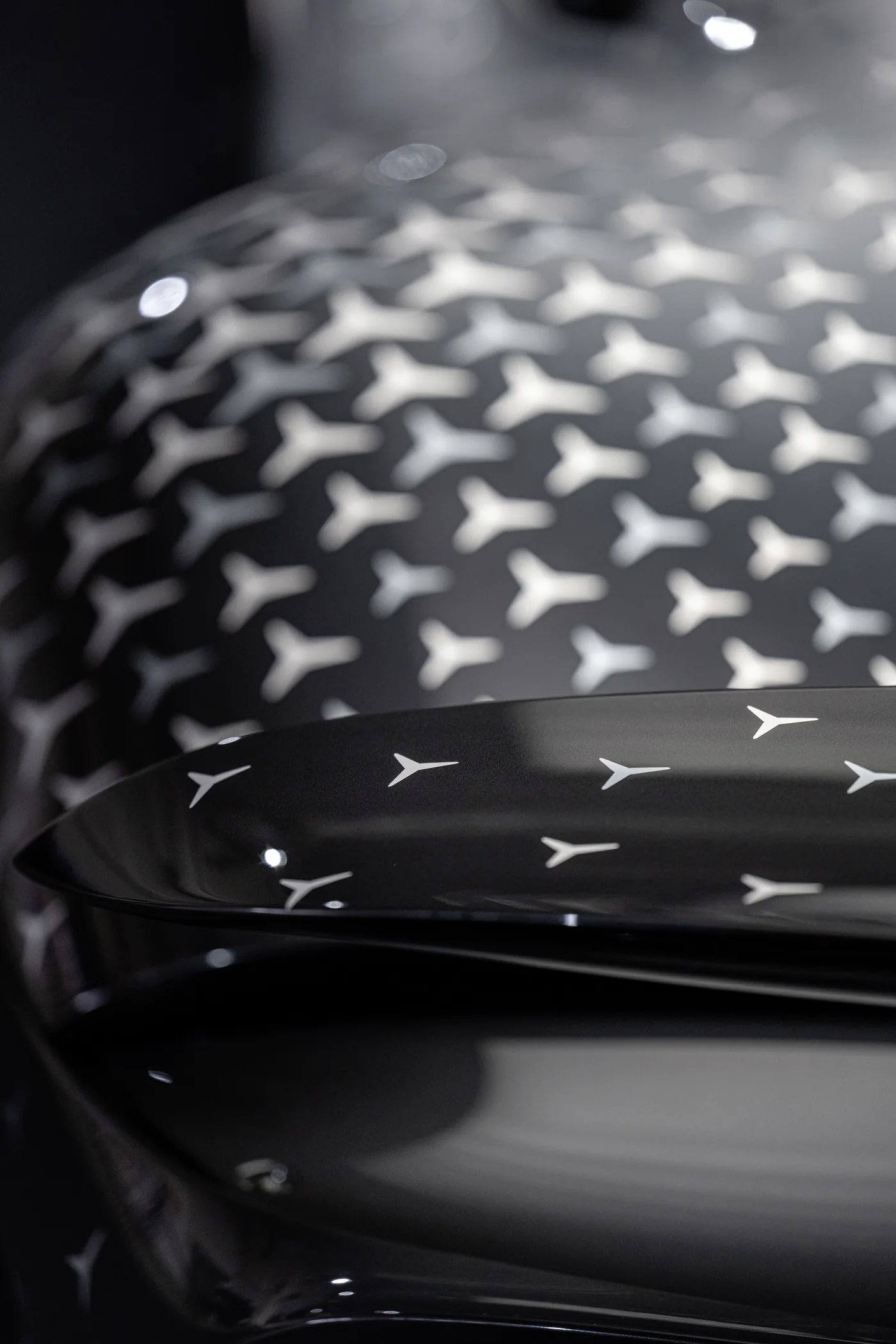
A white AMG logo on the front, with the Mercedes star applied as an airbrush motif. The flank airbrush was created by the same artist who painted the Formula 1 cars.
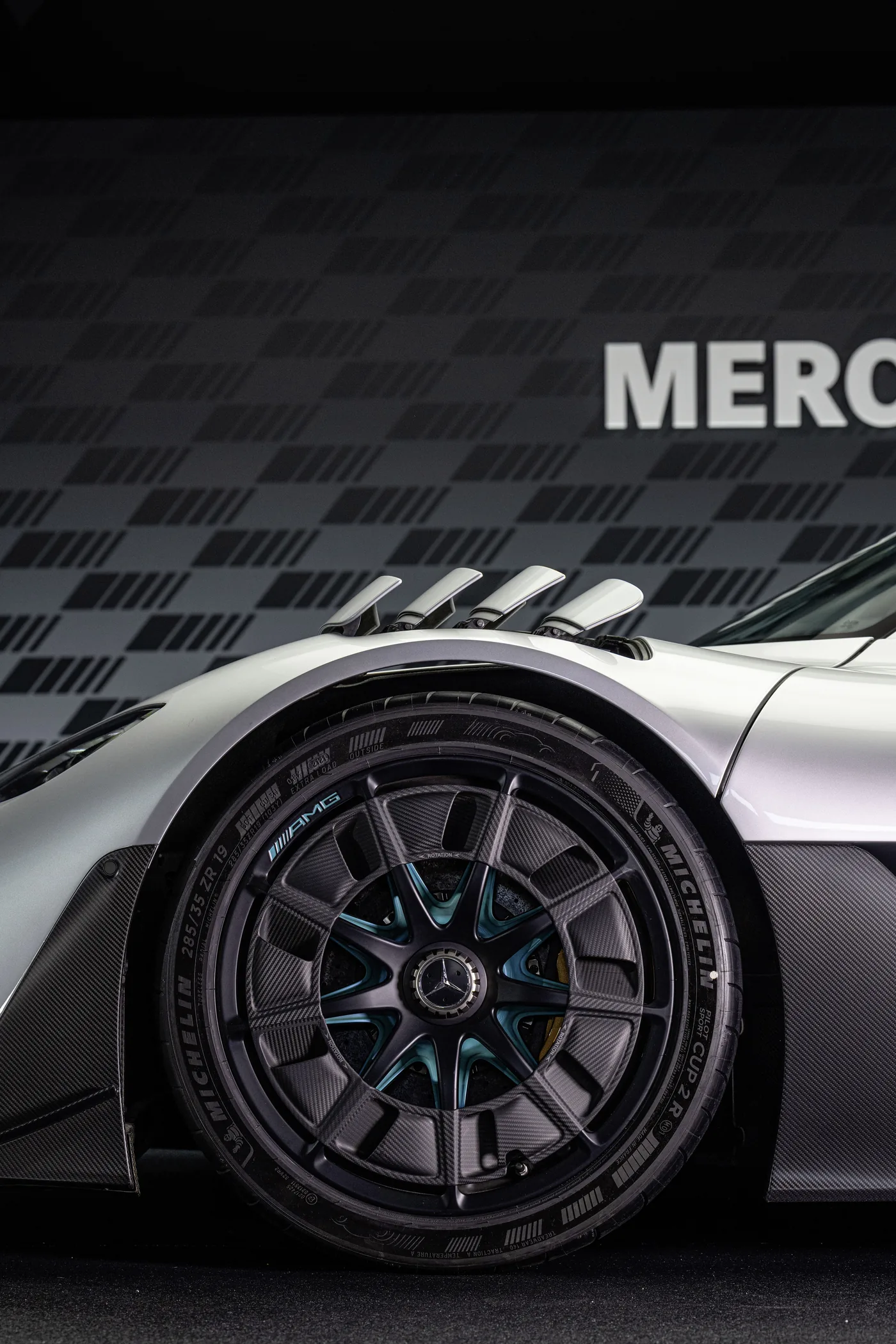
10-spoke forged aluminium wheels with carbon-fibre partial covers, 10 J × 19 at the front and 12 J × 20 at the rear. Optional 9-spoke magnesium forged wheels are available.
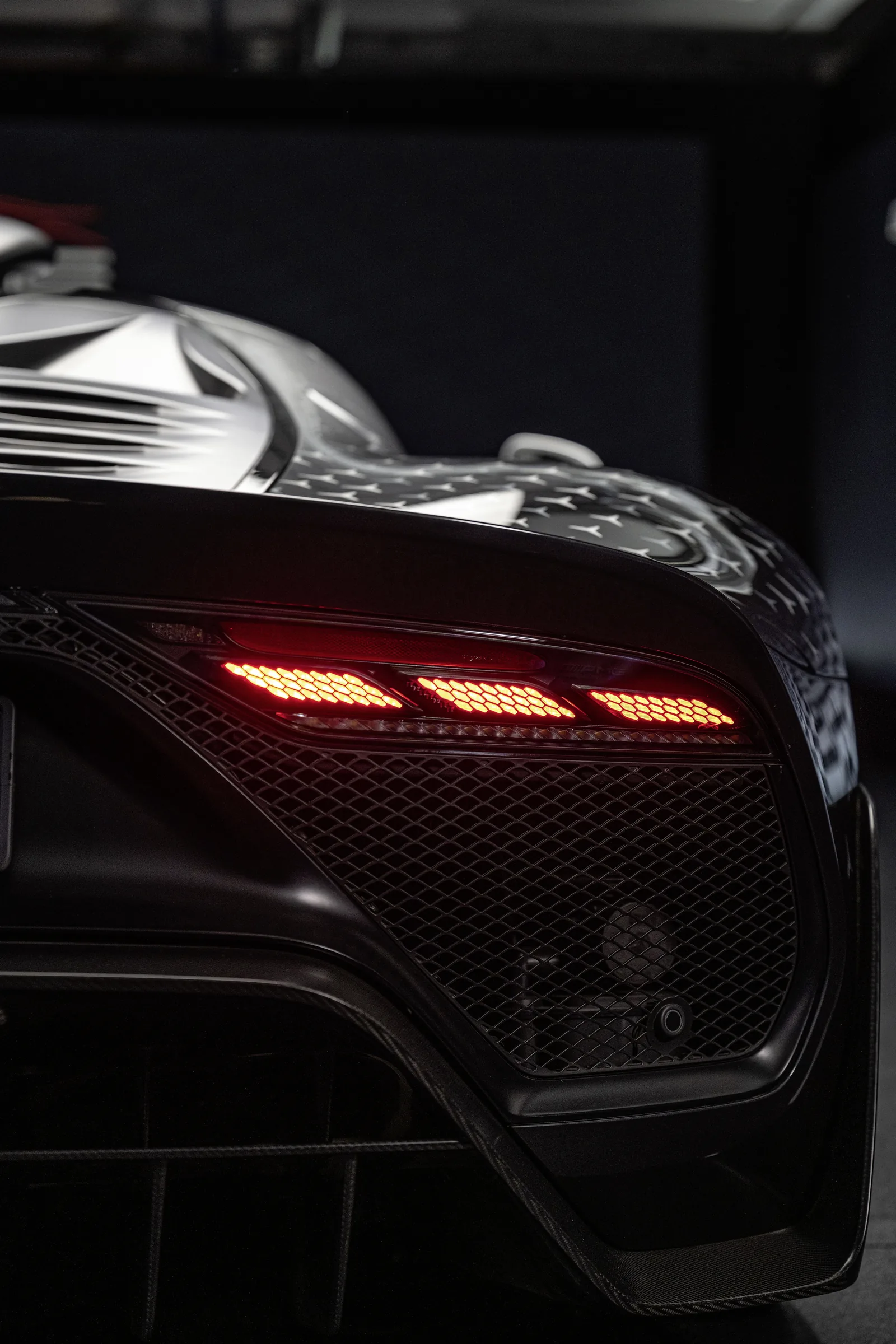
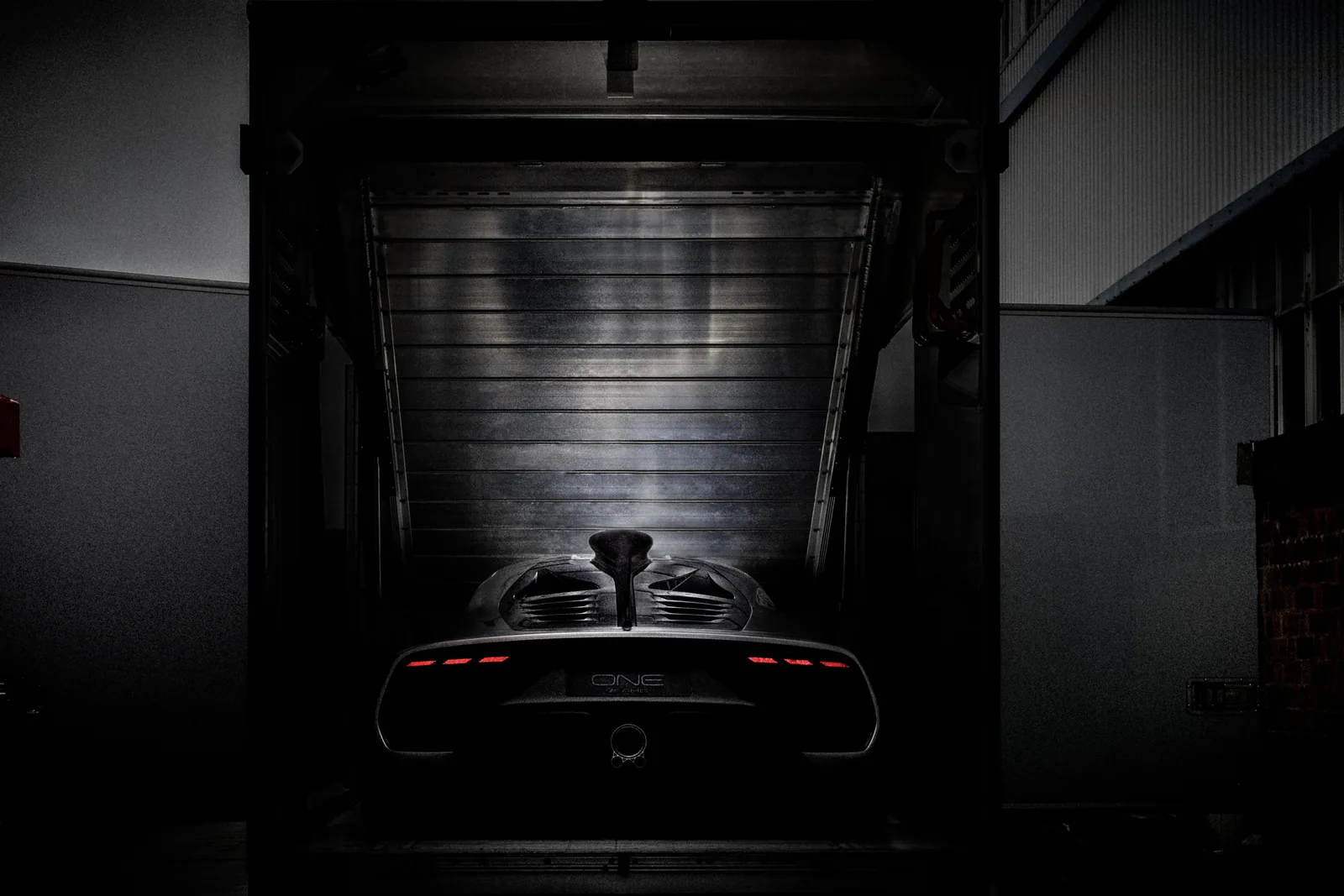
A two-part rear diffuser and a sharp spoiler lip, with one large and two small round exhaust outlets. Each tail light contains three diamond-shaped elements.
The mid-engine layout brings the cockpit far forward, with wide arches, a narrow waist and a wide tail. The doors open diagonally forwards and upwards.
Cockpit design
COCKPIT
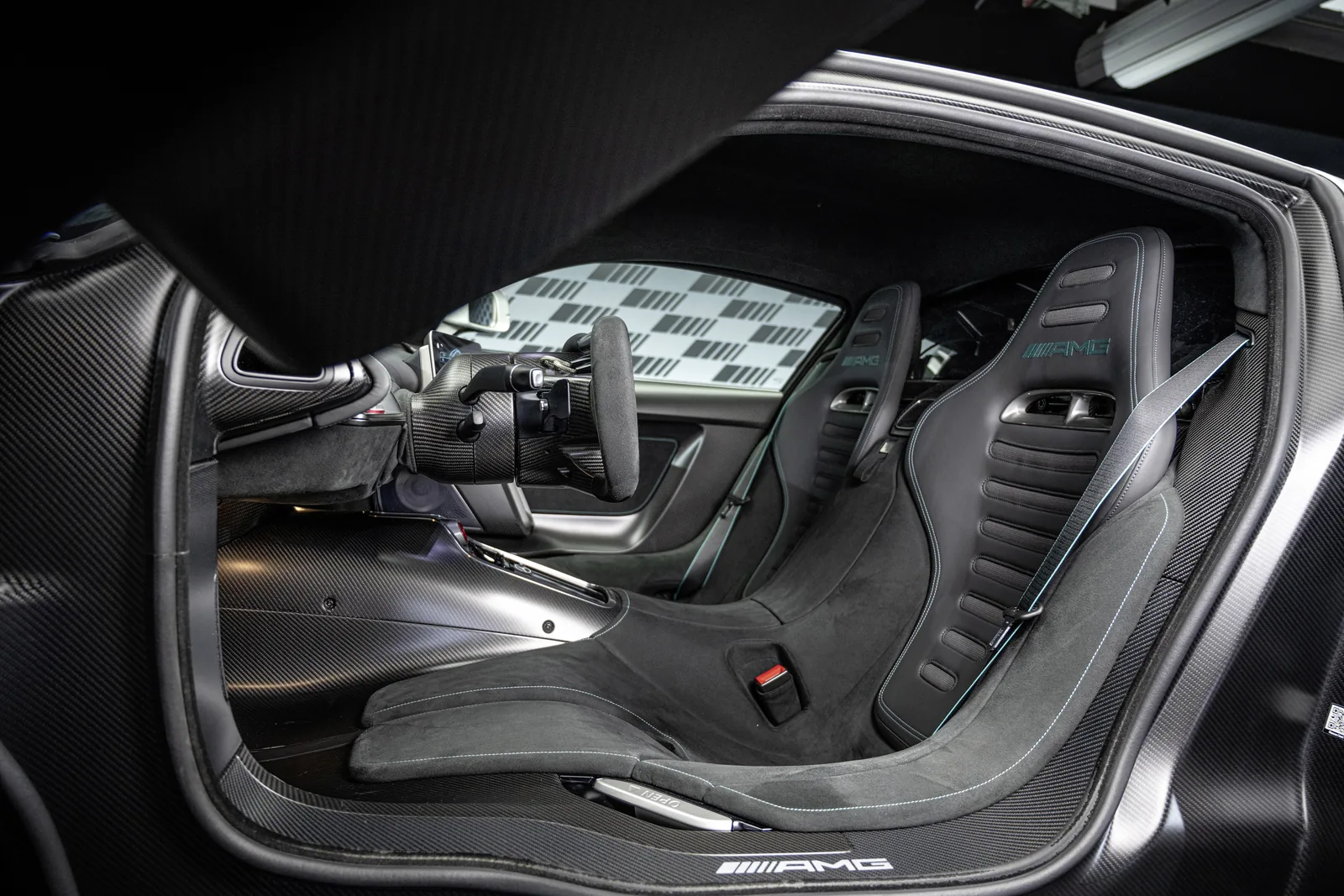
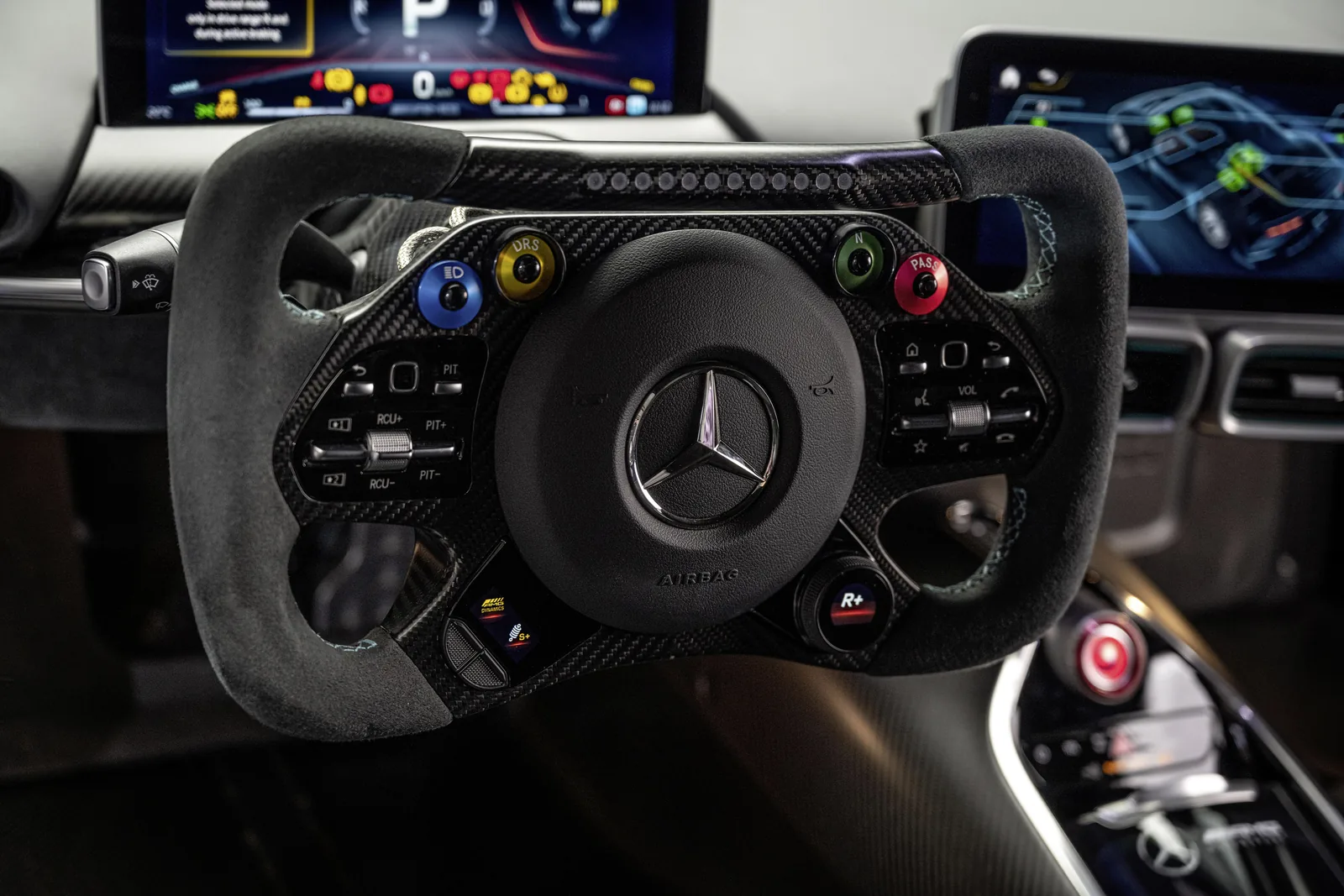
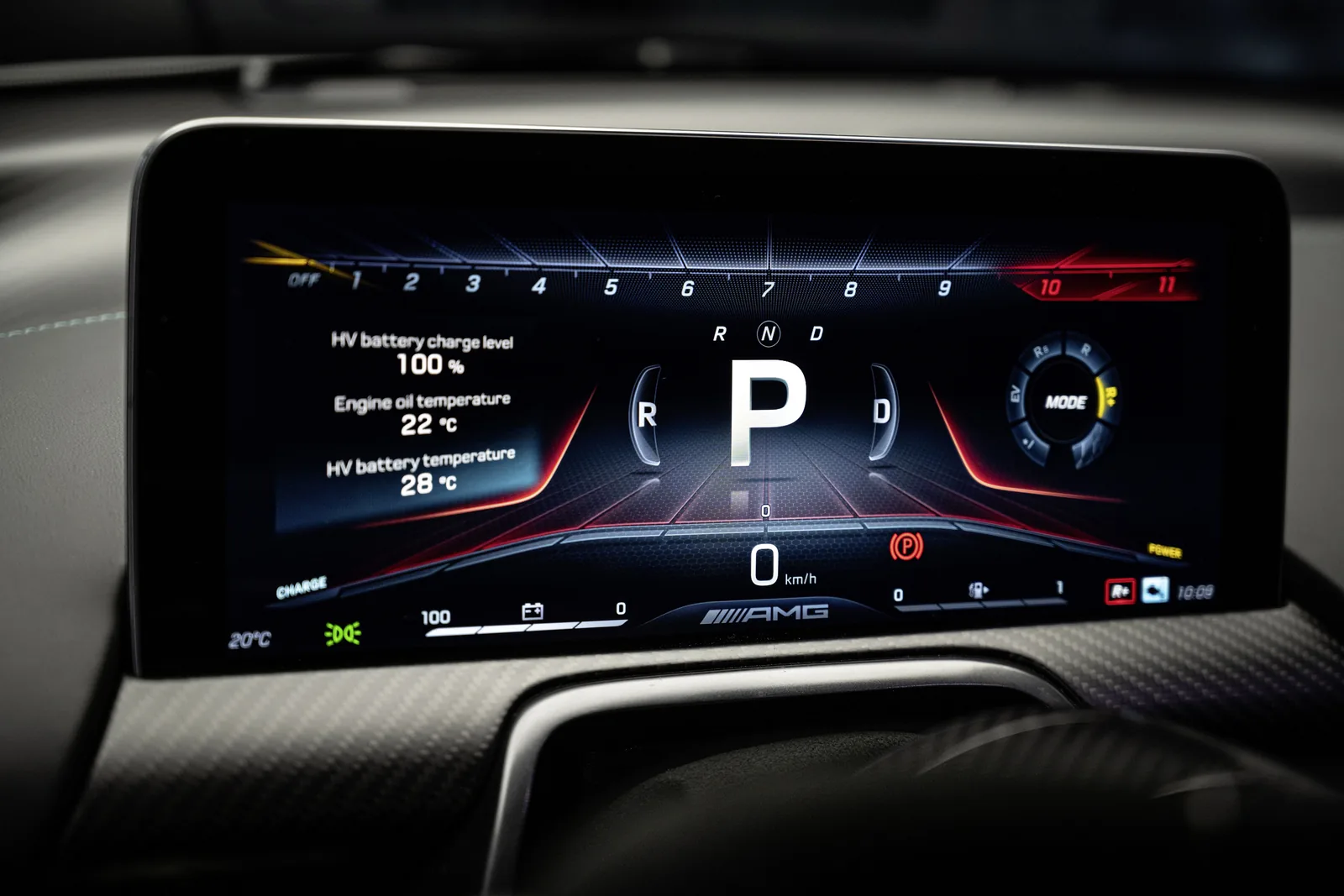
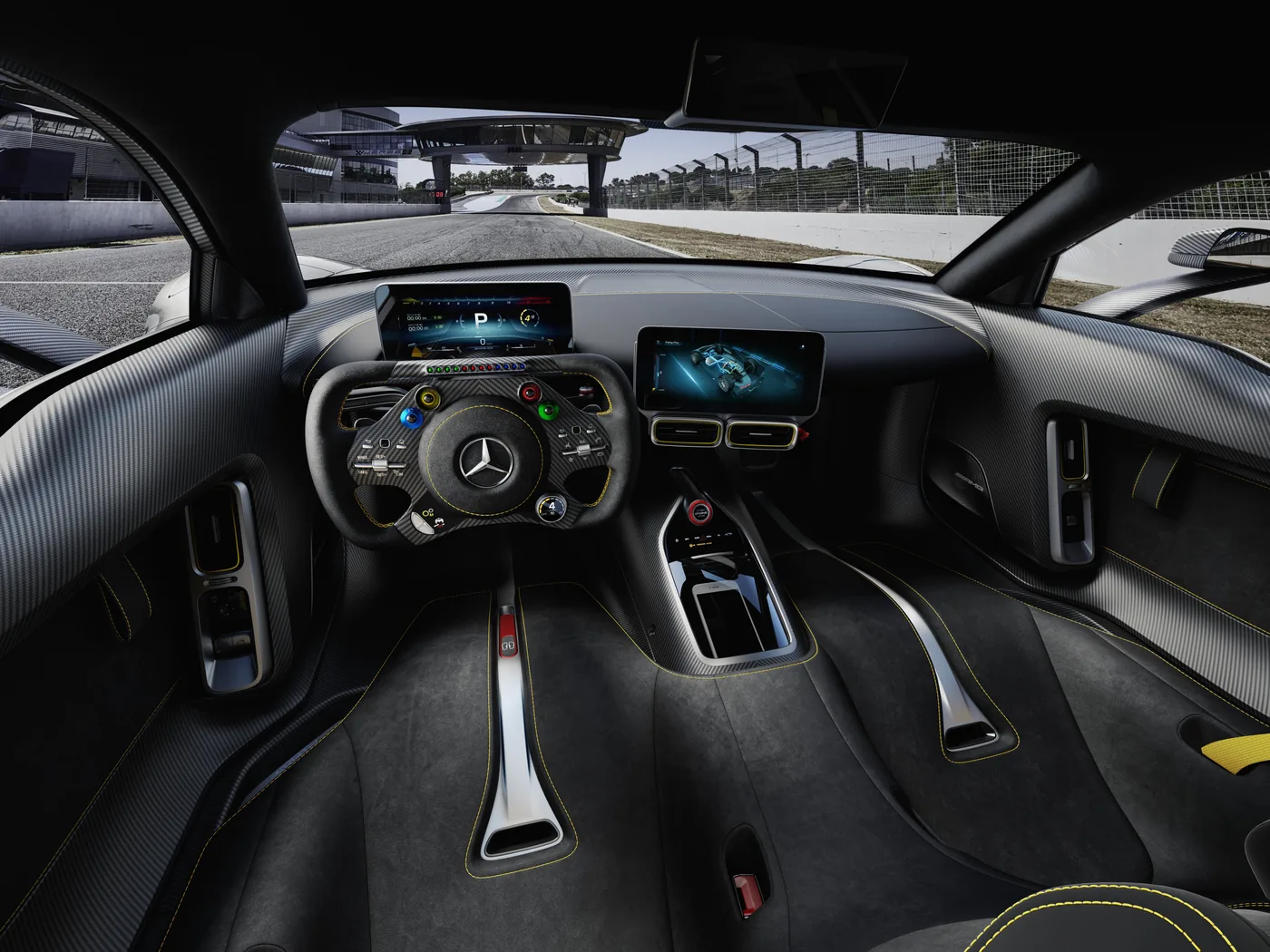
Function alone defines the cockpit; two 10-inch displays carry the instrumentation and infotainment.
The steering wheel is a racing design, flattened at the top and bottom, with an integrated airbag and a shift light; two AMG buttons control the drive programs, nine-stage traction control, DRS and the suspension setup. The wheel is electrically adjustable and the pedal box has eleven mechanical positions.
The bucket seats are fixed to the carbon-fibre monocoque, with backrests at 25° and 30°; a screen replaces the interior mirror and shows real-time MirrorCam images. Materials are exposed carbon fibre, Magma Grey nappa leather and black DINAMICA microfibre, with yellow stitching as standard.
- Steering wheel
- Formula 1 style, with a shift light and two AMG buttons
- Seats
- Fixed bucket seats in the monocoque, backrests at 25° / 30°
- Displays
- Two 10-inch displays
- Rear view
- MirrorCam screen instead of an interior mirror
Drive programs
DRIVE PROGRAMS
Six programs, for road and track. The official drive programs are Race Safe, Race, EV, Race Plus, Strat 2 and Individual.
The default program uses hybrid drive on demand, starting on electric power and engaging the engine only when more power is required.
Model timeline
TIMELINE
The timeline covers 11 milestones from 1967 to 2024, from the concept car debut and the start of production to the two Nürburgring records.
Technical data
OFFICIAL TECHNICAL DATA
Figures come from the official press material and technical data; the consumption figures are the current WLTP weighted values.
Tap a group to expand the official figures
Gallery
GALLERY
Official media images, filterable by exterior, track and detail.
MORE LEGENDS
275 units. Formula 1 technology brought from the racetrack to the road.
Independent editorial archive, not affiliated with Mercedes-Benz AG, and model names and trademarks belong to Mercedes-AMG GmbH. Data comes from official Mercedes-AMG press releases and technical data (2017–2024). © 2026